
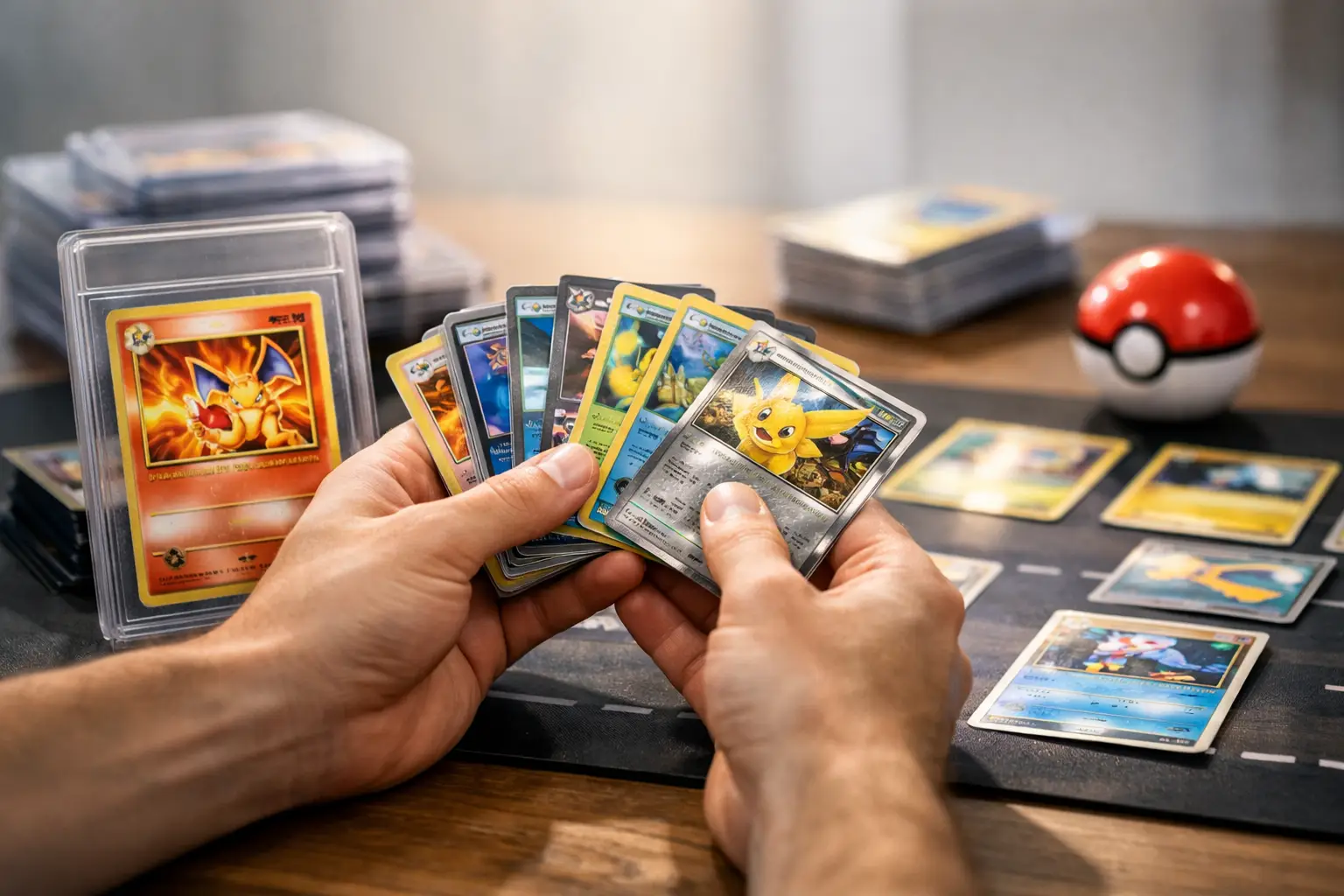
A fresh booster pack can be a birthday surprise, the start of a competitive deck, or one more shot at the card missing from your binder. That is what makes Pokemon trading cards different from most collectibles: there is no single right way to enjoy them. The smart first move is deciding what you want from the hobby before you buy.
Pokemon Trading Cards Start With a Goal
Collectors, players, and parents often walk into a card shop looking for the same thing - Pokémon cards - but they may need completely different products. A player who wants to build a deck needs useful cards and a reliable starting point. A collector chasing a favorite Pokémon may be better off with a single than opening multiple packs. A parent buying a gift may want the excitement of sealed packs without the pressure of knowing every set.
Start by choosing your lane. You can always move between collecting and playing later, but a clear goal helps your budget go further. If you love the artwork, build a binder around a Pokémon, an era, or a type of card. If you want to play, focus on a deck that gives you a functional foundation. If you enjoy the sealed side of the hobby, choose products because you genuinely want to keep or open them, not because you expect every box to rise in value.
That last part matters. Pokémon has major chase cards and memorable product runs, but sealed product is not a guaranteed investment. Print volume, demand, reprints, card condition, and changing collector interest all affect value. The enjoyment of owning the product should come first.
Choosing the Right Pokémon Card Product
The product wall can feel overwhelming at first, especially around a new release. Booster packs, booster boxes, elite trainer boxes, collection boxes, tins, decks, and single cards all serve a purpose. The best choice depends on how you plan to use what you buy.
Packs and Booster Boxes
Individual booster packs deliver the classic opening experience. They work well for small rewards, gifts, pack battles with friends, and collectors who enjoy trying different sets without committing to a larger purchase. The trade-off is simple: you get fewer cards for your money and no control over what you pull.
Booster boxes are built for people who want a larger opening session from one set. They are popular with collectors, streamers, groups of friends, and players looking for plenty of cards to sort through. Buying a sealed box does not guarantee a specific rare card, so treat it as an experience rather than a shortcut to a chase.
Elite Trainer Boxes and Collection Products
Elite trainer boxes are a strong middle ground. Along with packs, they often include sleeves, dice, markers, and a storage box. They make especially good gifts for newer fans because the product feels complete right out of the box.
Collection boxes and tins are often driven by the included promo card, featured Pokémon, or display appeal. They can be a fun pickup when you like the promo, but do not assume that a larger box automatically means better pack value. Check what is included and buy the product that fits your interest, not just the biggest package on the shelf.
Singles and Ready-to-Play Decks
Singles are the most targeted way to collect. If you have been chasing one card through packs, buying that card directly can be the better call. It protects your budget and lets you build a focused binder much faster. For competitive players, singles are also essential because opening product is rarely an efficient way to finish a deck list.
Ready-to-play decks are the most direct entry point for learning the game. They give newer players a functional deck, a basic sense of how turns work, and cards to upgrade over time. A deck may not be tournament-ready out of the box, but it is a far better starting point than a random stack of cards.
How to Buy Pokemon Trading Cards With Confidence
Authenticity and condition are part of the purchase, not an afterthought. Real Pokémon cards have consistent print quality, proper texture where applicable, clean coloring, and familiar cardstock. Counterfeits can look convincing in photos, particularly for high-demand cards, but poor font quality, unusual saturation, thin card stock, and incorrect holo patterns are common warning signs.
A dedicated hobby shop offers a practical advantage here. You can inspect cards, ask about condition, and shop products from a source that understands the category. At Waterfront Card Shop, the goal is to give New Bedford collectors and players a place to buy hobby products with that added confidence.
For singles, learn the basic condition language. Near mint generally describes a card with minimal visible wear. Lightly played can include small whitening, minor surface marks, or light edge wear. Moderately played and heavily played cards may still be great for a deck, but they should be priced accordingly. A card can be authentic and desirable while still having condition issues, so look at both.
When buying a higher-value card, take your time. Check the front surface under light, examine corners and edges, and look at centering if that matters to you. Collectors who plan to grade a card need to be more selective than players who simply want a clean copy for a binder or deck.
Build a Collection You Will Actually Enjoy
The strongest collections usually have a point of view. Maybe you collect every version of Charizard, vintage holo cards, illustration rares, cards from a favorite region, or the Pokémon you grew up with. A theme gives your binder momentum and keeps every purchase from turning into a random pile.
Set a monthly number before a release arrives. New sets create real excitement, and it is easy to buy more than planned while chasing a hit. A budget does not make the hobby less fun. It lets you keep collecting after the release weekend is over.
Protection should be part of that plan. Use penny sleeves for cards you want to keep clean, top loaders for cards that need rigid protection, and a quality binder for display cards. Avoid storing valuable cards loose in stacks, in hot cars, or near humidity. Even a modest card can become meaningful when it is tied to a favorite pull, a trade, or a memory with family.
Trading is another reason local card shops matter. A fair trade is not only about matching dollar amounts. Condition, liquidity, personal interest, and the ease of replacing a card all matter. Know current values, inspect cards before finalizing a deal, and never feel rushed into trading away something you would regret losing.
For Parents Buying Pokémon Cards
You do not need to memorize every set name to make a good purchase. Ask what the child already enjoys. If they love opening packs, a few boosters or an elite trainer box can make sense. If they talk about a favorite Pokémon nonstop, a collection box or single card featuring that character may feel much more personal. If they want to learn the game, begin with a ready-to-play deck.
It also helps to set expectations around pulls. Rare cards are exciting because they are not guaranteed. Let kids enjoy the commons, artwork, trading, and deck-building instead of making every opening about finding the most expensive card. That approach keeps the hobby fun and makes the occasional huge pull even better.
Pokemon trading cards reward curiosity. Learn the sets you like, protect the cards that matter, and buy at a pace that works for you. Whether your next stop is a first deck, a new binder page, or one carefully chosen single, make it a card you will be happy to see again years from now.