
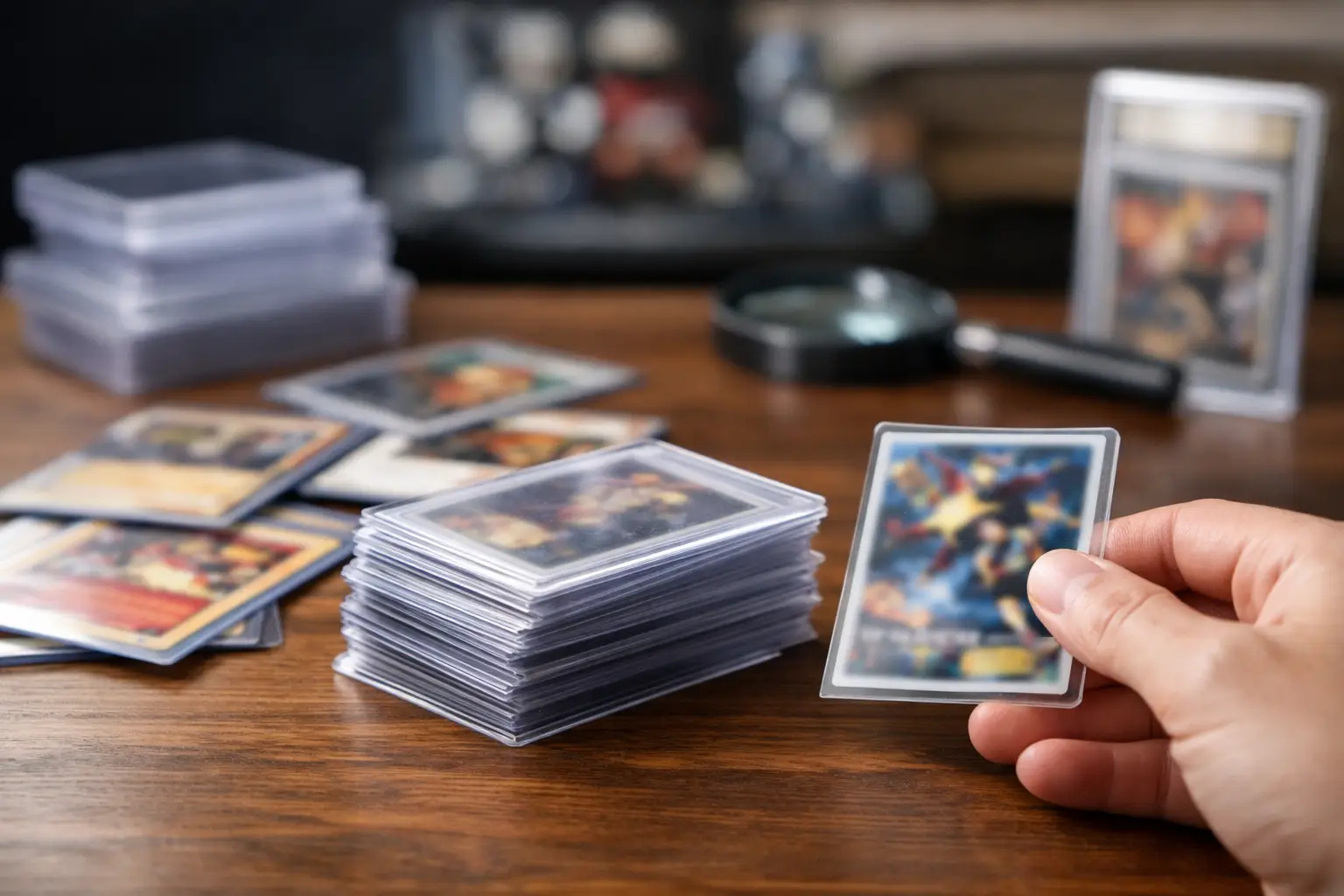
A freshly pulled Charizard does not become less exciting because it is not inside a slab. For most people building a Pokémon binder, a playable deck, or a personal collection, the question “are ungraded cards worth collecting” has a straightforward answer: absolutely. The better question is what you want the card to do for your collection.
Ungraded cards, often called raw cards, are the foundation of the hobby. They are what players shuffle, what binder collectors chase, and what many experienced collectors buy before deciding whether a card deserves grading. A slab can add protection and market confidence, but it is not the only form of value.
Are Ungraded Cards Worth Collecting for You?
Raw cards are worth collecting when you care about the card itself more than a number on a label. That could mean completing an illustration rare page, owning your favorite Pokémon from childhood, finding cards for a tournament-ready deck, or collecting a full set at a budget that makes sense.
A graded copy is often more expensive than an equivalent raw copy, especially at the top end of the grading scale. That premium can be worthwhile for a scarce vintage card, a major chase card, or a card you want protected for the long haul. But it can also put a favorite card out of reach. Choosing a clean ungraded copy may let you collect more of what you actually enjoy.
For kids, new collectors, and parents buying gifts, raw cards are usually the more practical starting point. They can be handled, traded, stored in binders, and enjoyed without every small corner touch feeling like a financial emergency. For experienced collectors, raw cards can be a smart way to target condition and decide for themselves which pieces are worth submitting.
The key is to avoid treating “ungraded” as if it means “low quality.” A raw card may be pack fresh, lightly played, or genuinely mint. It simply has not been evaluated and encapsulated by a third-party grading company.
Condition Still Drives the Value
An ungraded card does not have a formal grade, but condition matters every time. Two raw copies of the same card can have very different prices because one has clean surfaces and sharp corners while the other has whitening, scratches, dents, or creases.
Collectors commonly use condition terms such as near mint, lightly played, moderately played, heavily played, and damaged. These descriptions are useful, but they are not interchangeable with a professional grade. A near-mint raw card might receive several different grades depending on centering, surface print lines, tiny edge wear, and the standards of the grading company.
When looking at an ungraded card, start with the details that are difficult to ignore once the card is in your binder or collection. Check the front and back under good light. Look closely at corners and edges for whitening. Tilt holo cards to spot scratches, dents, and print lines. Check centering by comparing the border size from side to side and top to bottom.
For modern Pokémon cards, even a card pulled straight from a sealed product can have factory issues. Off-centering, minor edge wear, and print defects happen. That does not make the card a bad collectible. It only means you should not pay a gem-mint price for it or assume it is an automatic grading candidate.
Raw Cards Make Better Binder and Deck Collections
A graded card is protected, but it is also locked into a bulky case. That works well for display pieces, high-value vintage cards, and cards whose condition is central to their appeal. It is less ideal when you want to see a complete set laid out in a binder or need cards for a deck.
Binder collectors often get more enjoyment and more variety from ungraded cards. Instead of spending the entire budget on one graded chase card, you may be able to finish several favorite pages, pick up alternate arts, or add classic holos from different eras. The collection feels personal rather than built around a population report.
Players have an even clearer reason to collect raw. A card meant for play should be sleeved and used. While some collectors enjoy owning graded copies alongside playable copies, breaking a slab just to build a deck rarely makes financial sense. Raw cards let you focus on legality, card condition, and finding the right version for your list.
That does not mean every raw card belongs in a binder without protection. Penny sleeves, top loaders, semi-rigid holders, and quality side-loading binders all have a place. Protecting raw cards properly preserves their condition while keeping them accessible.
When Graded Cards Have the Edge
There are situations where a graded card is the better buy. If you are spending serious money on a vintage base set holo, a rare promotional card, or a high-demand sports rookie, a reputable grade can reduce uncertainty. The holder offers tamper-resistant protection and makes condition easier to communicate when it is time to sell or trade.
Graded cards are also useful when you specifically want a top-condition example. A card labeled Gem Mint 10 carries a clearer market expectation than a raw listing described as “mint.” That clarity is why high-grade cards can command substantial premiums.
Still, grading is not a guarantee of profit. Submission fees, shipping, insurance, turnaround times, and the possibility of a lower-than-expected grade all matter. A card that looks clean may come back with a 7 or 8 because of a small dent, centering issue, or surface flaw that was hard to see. Before submitting, compare the likely value of the raw card with recent values at realistic grades, not only the price of a 10.
For many collectors, the best approach is a mix: raw cards for the binder and the deck box, graded cards for the few pieces they want to display or preserve at the highest level.
Buying Raw Cards With Confidence
The biggest advantage of buying from a knowledgeable card shop is being able to ask about condition and see what you are getting. If a card is being sold as near mint, it should be treated accordingly. If it has visible whitening or a crease, that should affect both the description and price.
Authenticity deserves equal attention, especially with vintage Pokémon, expensive alt arts, sports rookies, and cards that are frequently counterfeited. Real cards have specific textures, print patterns, colors, font details, and construction. A deal that looks far below market can be a warning sign, not a lucky find.
When comparing raw prices, do not compare every copy as if it is identical. Look for the same card number, language, printing, holo variation, and condition. First edition, unlimited, reverse holo, stamped promo, and reprint versions can have very different values even when the artwork looks similar.
Keep your expectations tied to your goal. If you want a card for a childhood binder, lightly played condition may be perfect and can save real money. If you want a possible grading submission, be selective and inspect it closely before paying a premium. If you are buying for a younger collector, a card with a little wear may be the ideal worry-free choice.
The Value That Does Not Fit on a Label
Market value matters, particularly when you are buying, selling, or trading higher-end cards. But a label cannot measure why a card belongs in your collection. The illustration rare you pulled at a prerelease, the worn holo you traded for at school, or the card that completes a favorite Pokédex page can matter more than a pristine graded example.
Raw collecting also keeps the hobby active. You can sort cards, build pages, trade duplicates, test decks, and make discoveries set by set. That hands-on part is why many collectors stay interested long after a release stops being new.
At Waterfront Card Shop, the goal is not to tell every collector they need the same kind of card. Bring your budget, your favorite characters, and your collecting goal. A clean ungraded card can be the right pickup because it fits your binder, your deck, and the part of the hobby you want to enjoy next.