
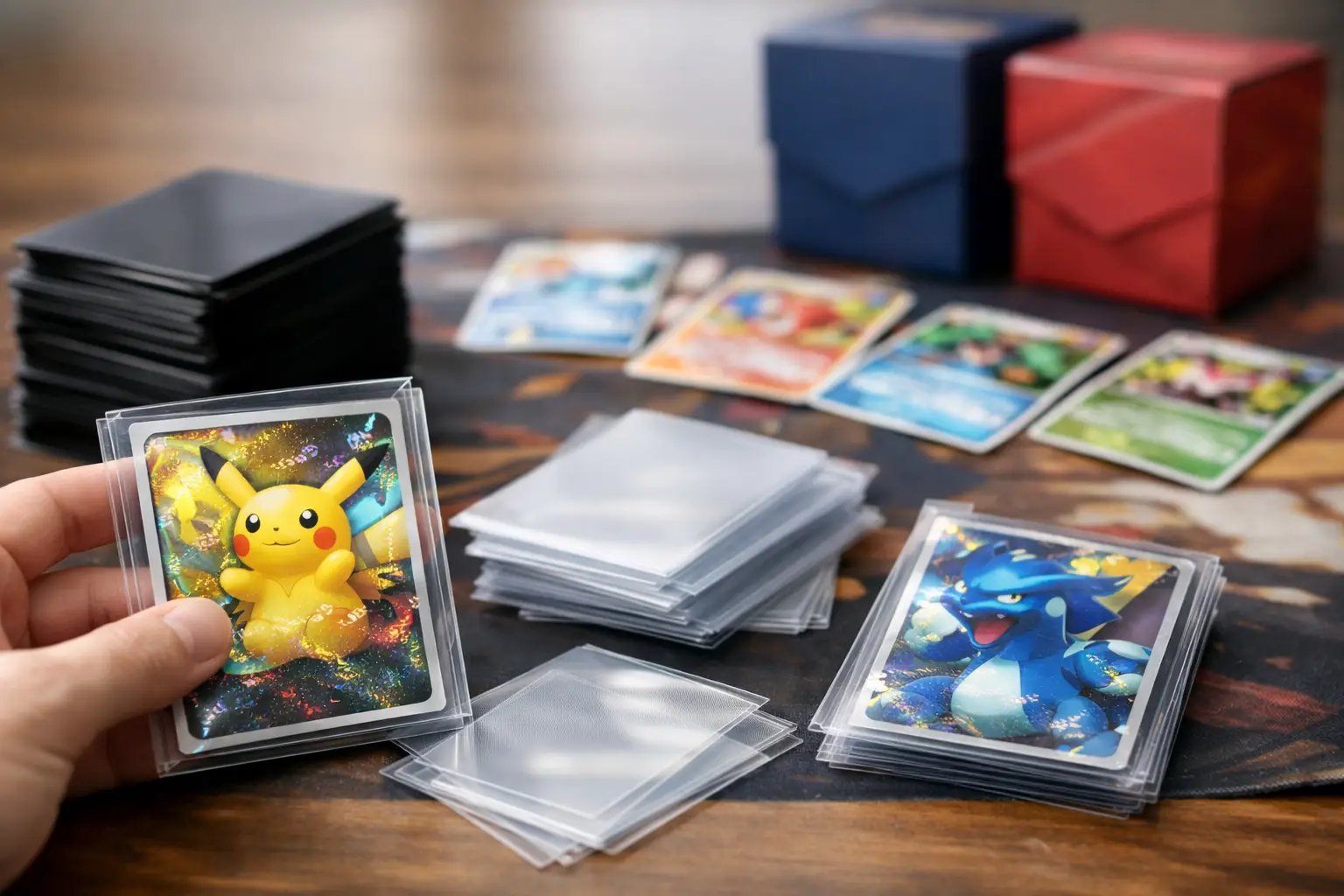
A fresh pull can go from pack-fresh to played in one careless shuffle. The best card sleeves for Pokemon are not always the flashiest option on the shelf. They are the ones that fit correctly, shuffle cleanly, keep corners safe, and match the way you actually use your cards - whether that means league night, a packed binder, or a top-loader display for a favorite chase card.
Best Card Sleeves for Pokemon Start With the Job
Most English Pokémon cards use the standard trading card size: about 2.5 by 3.5 inches, or 63 by 88 mm. Look for sleeves labeled Standard, not Japanese size. Japanese-size sleeves are narrower and are made for games with smaller cards. They can pinch Pokémon cards, bend edges, or simply fail to fit.
Before choosing a brand or color, decide what the card is doing. A playable deck needs consistency and durability. A binder collection needs a clear view and enough protection against scuffs. A high-value single usually needs a layered setup that adds more protection without putting pressure on the card.
That distinction matters because one sleeve does not have to do every job. Clear penny sleeves are useful for storage but are a poor choice for regular play. Heavy-duty matte deck sleeves feel great in hand but can hide a card’s back design. Premium inner sleeves offer excellent coverage, yet they are not meant to be the only layer around a card.
Choose Sleeves by How You Collect and Play
For tournament decks and regular play
For decks that get shuffled every week, matte-backed standard sleeves are the usual answer. Dragon Shield Matte sleeves are a longtime favorite because they are thick, durable, and available in a deep range of solid colors. Their textured backs generally shuffle well, even after plenty of games, and the stronger material gives cards good corner protection.
Ultimate Guard Katana sleeves are another strong option for players who want a smooth shuffle and a clean, premium feel. They tend to have very clear fronts, which helps foil cards and full-art Pokémon stand out. Some players prefer Katanas for their slick feel, while others prefer the firmer structure and slightly more textured handling of Dragon Shields. Neither choice is wrong. It comes down to how your deck feels after several rounds of shuffling.
Ultra PRO Eclipse sleeves are worth considering if you want an opaque back and a matte front that reduces glare. That can be especially helpful under bright event lighting. Matte fronts may make foil cards look a little less glossy than crystal-clear fronts, but they are less likely to show fingerprints and reflections.
For sanctioned play, use one matching set of sleeves for the whole deck. Replace sleeves with splits, bent corners, stains, or noticeably different wear. A marked sleeve can create an avoidable issue at a tournament, even when there was no intent to gain an advantage.
For binders and set collections
Binder cards do well in clear, soft penny sleeves or clear standard sleeves before they go into a side-loading binder. Penny sleeves are inexpensive and useful for keeping surface scratches, dust, and binder friction off holofoil cards. For a collection you handle often, a slightly thicker clear sleeve gives more support.
Avoid forcing sleeved cards into binder pockets that are too tight. Pressure can bow cards and catch sleeve corners when you turn a page. Side-loading binders with a zipper are a popular choice for valuable collections because they help keep cards enclosed and reduce the chance of cards slipping out during transport.
If you are building a master set, consistency makes the binder look better and makes future organization easier. Use the same type of clear sleeve across the set when possible. It keeps pocket depth and card presentation uniform, especially when reverse holos, illustration rares, and ex cards sit next to one another.
For expensive singles and graded-card candidates
A valuable Pokémon card deserves more than a loose penny sleeve. Start with a clean, properly sized penny sleeve, then place it in a semi-rigid holder or a top loader depending on your storage plan. Semi-rigids are commonly used when cards may be submitted for grading, while top loaders are excellent for display, trades, and long-term storage.
For extra coverage, many collectors use a perfect-fit inner sleeve inside a standard outer sleeve. Perfect fits sit closely around the card and can guard the top and sides from dust. The trade-off is that they require a careful hand. If the fit is too tight, or the card is pushed in too quickly, you can catch a corner. Never force a card into any sleeve.
Some collectors use resealable outer bags over top loaders for cards they take to shows or trade nights. This helps keep the holder itself clean. It does not make a top loader indestructible, so keep high-end cards in a sturdy storage box rather than loose in a backpack.
Sleeve Features That Actually Matter
Thickness is the first feature most players notice. Thicker sleeves usually protect better and last longer, but they make a 60-card deck taller and can feel bulky. A thinner sleeve may shuffle faster at first, yet it can split sooner if you play frequently. If you are teaching kids or building a casual deck, a dependable mid-priced sleeve can be the sensible choice. Save the premium sleeves for decks that stay together and see regular play.
Opacity matters for deck sleeves. A solid, opaque back prevents differences in card backs, double-sleeved cards, and minor print variation from being visible through the sleeve. Clear-backed sleeves are best reserved for binders, display cards, or decks where card backs are meant to show and every card is in the same condition.
The front finish affects visibility. Clear fronts show off foil patterns and artwork with maximum shine. Matte fronts cut glare and can hide light scratches better. Players who attend events often appreciate matte fronts; collectors displaying a special card often prefer clear.
Also check sleeve quality before putting a full deck inside. Run a finger along the seams, look for uneven cuts, and make sure the opening is clean. Even respected brands can have an occasional imperfect sleeve in a pack. Catching one early is better than discovering it during a game.
A Simple Sleeve Setup for Most Pokémon Collections
You do not need a separate product for every card, but a few basic layers cover nearly every situation. Keep penny sleeves for fresh pulls and storage, a pack of quality standard matte sleeves for decks, and top loaders or semi-rigids for cards with real personal or market value. Add a side-loading binder for set collecting.
When sleeving a deck, use fresh sleeves from the same pack whenever possible. If you need replacements later, consider replacing the entire deck sleeve set rather than mixing in a handful of new sleeves. The color may match, but the texture and wear level often will not.
For double-sleeving, place the card into the inner sleeve with the opening facing one direction, then place that sleeved card into the outer sleeve with its opening facing the opposite direction. This creates better coverage against dust and spills. It also makes the deck thicker, so confirm your deck box has enough room before committing to the setup.
Keep Sleeves Clean and Know When to Replace Them
Sleeves are protective gear, not permanent storage. Grit caught inside a sleeve can still scratch a card, and sticky hands can cloud clear fronts fast. Keep food and drinks away from the play area, wipe down the table before sorting cards, and store decks in deck boxes when they are not being used.
Replace deck sleeves when corners split, backs begin to peel, or the deck no longer shuffles evenly. Do not wait until a sleeve fails in the middle of a round. For a binder card, replace a sleeve if it becomes cloudy, creased, or visibly dirty. The cost of a new sleeve is small compared with the condition of a favorite card.
At Waterfront Card Shop, the right choice usually starts with a quick question: is this card for playing, collecting, trading, or grading? Bring in the card or explain the setup you are building. A sleeve that fits your actual hobby routine will protect your Pokémon collection better than the most expensive option bought for the wrong purpose.