
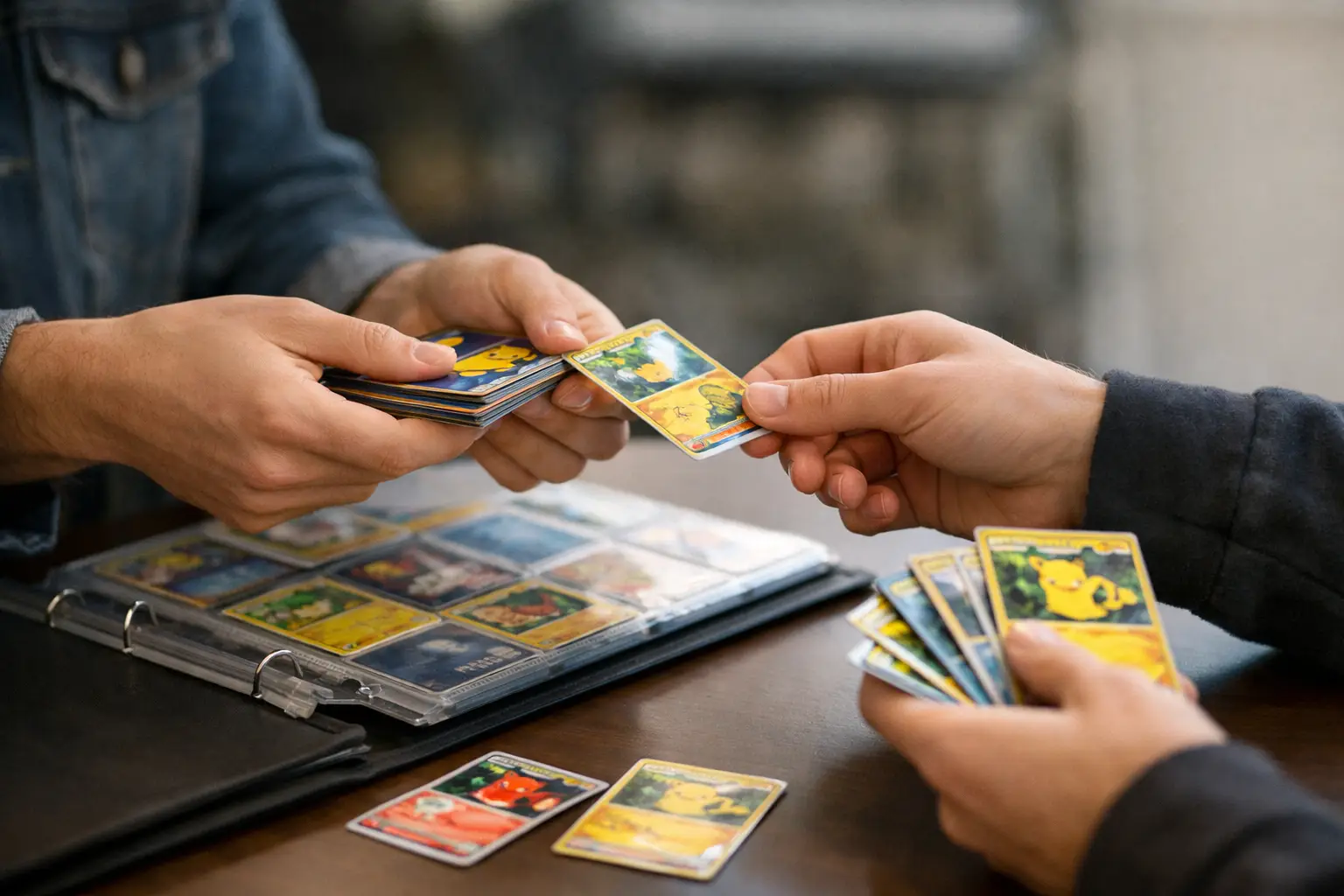
A trade can feel great for about ten minutes, then rough when you get home, check the card price, and realize your clean illustration rare became three low-demand cards with whitening. Learning how to trade pokemon cards is less about winning every deal and more about knowing what is in front of you, protecting your collection, and trading for cards you will actually enjoy.
Whether you are filling a Pokédex binder, upgrading a competitive deck, or chasing a favorite Pokémon, good trades start before anyone puts cards on the counter.
Know What You Are Trading
Do not trade from a binder you have not looked through recently. Pull out the cards you are open to moving and separate them from personal favorites, deck staples, and cards you may want graded later. A clear trade binder prevents the classic problem of agreeing to a deal and then regretting the card you gave up.
It also helps to know why a card has value. Rarity symbols matter, but they are only part of the picture. Set, print run, character popularity, artwork, tournament playability, condition, language, and current demand can all affect what someone is willing to trade for a card.
A modern ultra rare may look more impressive than an older holo, but the older card can carry more collector demand. On the other hand, a playable card from a current format can rise quickly because players need copies now. Do not judge a trade by the amount of foil alone.
For valuable cards, confirm the card name, set number, and version. Reverse holos, regular holos, promos, stamped cards, and alternate-art versions can have very different values even when they feature the same Pokémon. A quick check can save an awkward correction after the trade is already done.
How to Trade Pokemon Cards at Fair Values
Start with recent sold prices, not just the highest price someone has listed. Asking prices show what a seller hopes to get. Sold prices give a better sense of what collectors have actually paid. Compare like with like: raw card to raw card, near mint to near mint, and English to English unless both people understand the difference.
There is no single perfect number. A card's cash value and trade value are often slightly different, especially at a local shop or trade night. Trading involves convenience, demand, and the fact that both sides are taking on the work of finding the next card they want. A small gap is normal. A major gap needs a conversation.
If the values are close but not exact, add a lower-value card, a few playable trainers, or a small amount of cash if everyone is comfortable with it. Avoid forcing a deal just to make every dollar line up. Two collectors who both want the cards can make a fair trade without treating it like a courtroom negotiation.
For younger collectors, parents can help by setting a simple rule before a trade: no high-value cards leave the binder without an adult or trusted shop staff member checking the deal. That does not take the fun out of trading. It gives kids room to learn the hobby without one bad swap ruining a favorite card.
Condition Is Part of the Deal
Condition is where many trades go sideways. When someone says a card is near mint, look at it under good light before agreeing. Check the front and back for whitening, scratches, dents, bends, edge wear, print lines, stains, and creases. Run a careful eye over the corners and surface, especially on dark-backed cards where whitening stands out.
A tiny speck of whitening on a binder card may not matter much. A dent, crease, or deep scratch can change the card's value significantly, particularly for vintage cards and cards that might be graded. Do not rely on a sleeve to tell you everything. Ask before removing a card, then inspect it respectfully over a clean surface.
Be honest about your own cards too. Calling a played card near mint may get a trade done once, but it is a fast way to lose trust in a local card community. If a card has a flaw, point it out. Most collectors will still consider it if the price reflects the condition.
Use sleeves for cards you value, and place bigger cards in a rigid holder when bringing them to a trade event. Good protection keeps cards clean and shows the other person you handle your collection with care.
Trade for Your Collection, Not the Hype
The best trade is not always the one with the biggest number attached to it. If you collect Gengar, a card you have wanted for months may be worth trading several random pulls for, even if those pulls could climb later. If you are building a deck for league play, getting the last pieces you need can be more useful than holding a flashy card you will never use.
At the same time, give yourself a pause when hype is running hot. New set releases can create wild early prices. Chase cards may fall once more product is opened, while certain playable cards can move based on tournament results. That does not mean you should never trade a new card. It means you should decide whether you want it for your binder, your deck, or because everybody else is talking about it.
A practical habit is to keep a short want list in your phone or inside your binder. Include the card name, set, preferred condition, and the rough value range you are comfortable trading. It keeps a trade focused when a table is full of tempting cardboard.
Watch for Counterfeits and Altered Cards
Counterfeit Pokémon cards are a real concern, especially with expensive vintage cards, popular promos, and high-demand alternate arts. If a deal feels far too good, slow down. Check the card's texture, font, colors, holo pattern, borders, and back against a known authentic copy or trusted images. Poor print quality, washed-out color, incorrect texture, and unusual card stock are common warning signs.
Do not bend, rip, or perform internet “tests” on another person's card. Those can damage real cards and create a needless argument. If you are unsure, simply say so and pass on the trade until you can get another opinion.
The same goes for altered or repaired cards. Ink touch-ups, trimmed edges, pressed creases, and surface work can affect collectibility and grading potential. Altered cards are not automatically worthless, but they should never be presented as untouched copies.
Make In-Person Trades Safer and Easier
A card shop, organized trade night, or public event is a better place to trade than a random parking lot or an unmoderated meetup. You have a clean table, other hobbyists nearby, and often someone experienced who can help settle a question about authenticity, condition, or value. At Waterfront Card Shop, a trade conversation is usually more useful when both collectors bring organized binders and a clear idea of what they want.
Keep the trade visible. Lay out every card involved, count them once, and confirm the final deal out loud before cards change hands. Do not let anyone rush you, distract you with a second binder, or swap cards while you are looking away. Most collectors are straightforward, but simple habits prevent avoidable mistakes.
For online trades, ask for clear front-and-back photos, references when appropriate, and tracked shipping for meaningful values. Package cards properly in sleeves, rigid protection, and a team bag or similar moisture barrier. Online trading can work well, but it carries more risk than handing cards across a table.
Build a Reputation Worth Trading With
The hobby is smaller than it looks. People remember the collector who communicates clearly, accurately describes condition, and honors an agreed trade. They also remember the person who pressures kids, hides flaws, or backs out after the other side has committed.
Bring fair offers. It is fine to negotiate, and it is fine to say no. You do not need to accept a trade just because someone asks, and you do not need to explain every decision. A simple “I’m holding that one for my collection” is enough.
The strongest trade binders tell a story about what their owner enjoys. Keep yours organized, know the cards you can move, and leave room for the unexpected find. When you trade with patience and a little homework, the cards you bring home will feel better than the ones you gave away.