
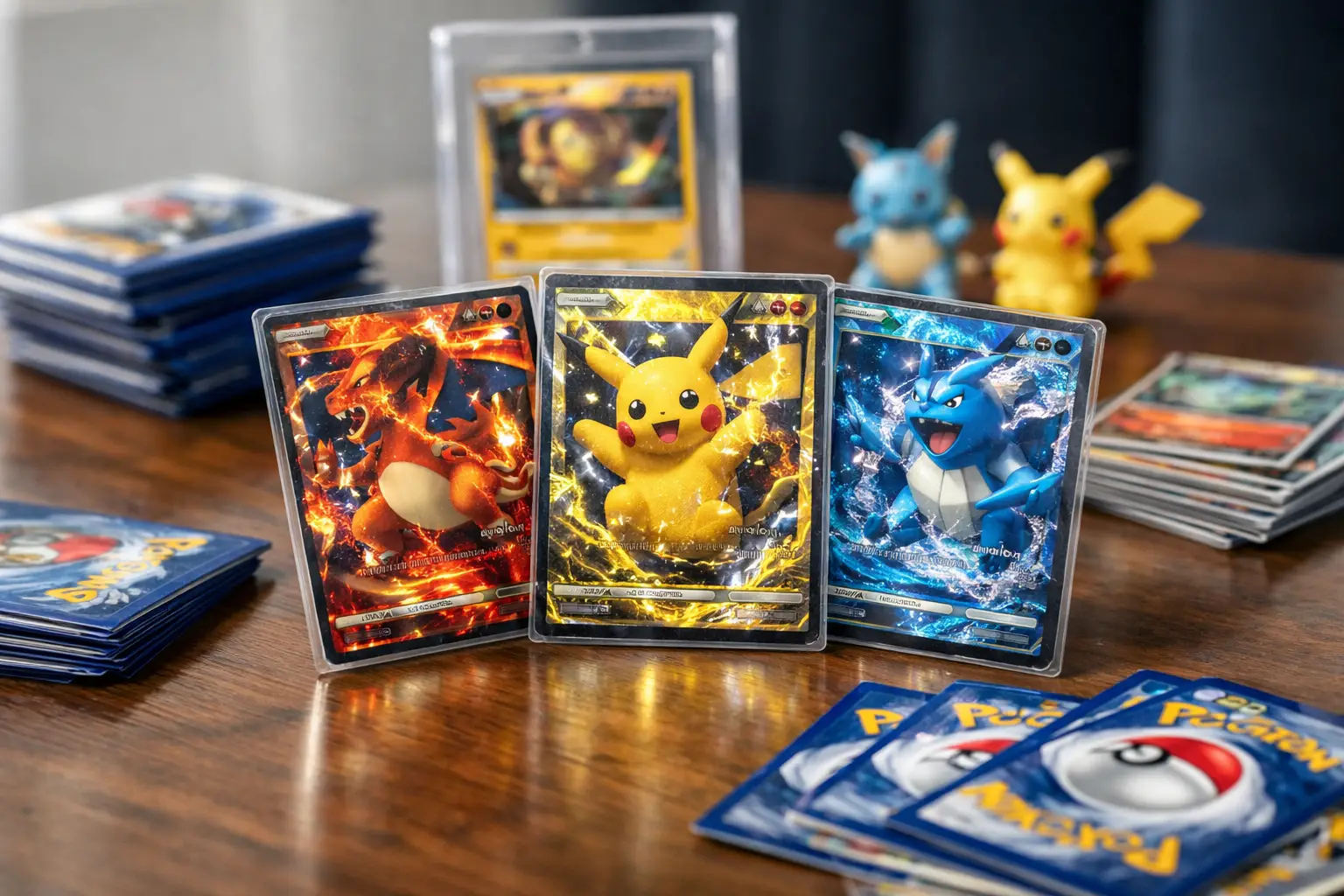
A Charizard may be the first card that comes to mind, but the best pokemon trading cards are not automatically the most expensive ones. The right card depends on what makes the hobby fun for you: filling a childhood-era binder, chasing artwork, building a tournament-ready deck, or picking out a gift that a younger fan will actually want to open.
That distinction matters at a card shop. A minty vintage holo can be a centerpiece, while a modern Illustration Rare may deliver more visual impact for a fraction of the price. Sealed products bring the excitement of the pull, but singles let you buy the card you truly want. There is no one-card answer, but there are smart places to start.
What Makes a Pokemon Card Worth Choosing?
A card can be “best” because of its character, its artwork, its rarity, its condition, its playability, or the story attached to the set. Collectors often value several of those factors at once. A classic card with a famous Pokémon, an early printing, strong eye appeal, and clean condition has broad demand. A newer card can be just as satisfying if its art lands with you or it completes a personal collection.
Start by deciding which lane fits your goal. Nostalgia collectors often look toward the sets they remember from childhood. Artwork collectors may chase full-art cards, Illustration Rares, Special Illustration Rares, and promos. Players prioritize legal cards with useful attacks, abilities, and consistency. Parents and gift buyers usually get the best result by pairing a favorite Pokémon with a budget-friendly product that feels special.
Condition belongs in every conversation. The same card can carry very different value depending on centering, corners, surface scratches, whitening, creases, and whether it has been professionally graded. A played childhood card may be perfect for a binder. A collector seeking a premium copy should inspect photos closely and understand the difference between Near Mint, Lightly Played, Moderately Played, and damaged condition.
Best Pokemon Trading Cards by Collecting Goal
Vintage holos for nostalgia
Base Set, Jungle, Fossil, Team Rocket, Gym sets, and the Neo era remain favorites because they connect directly to the earliest years of the Pokémon Trading Card Game. The holographic cards from these releases have a look that newer treatments cannot replicate. Even familiar cards such as Zapdos, Gengar, Blastoise, Alakazam, and the original starter Pokémon can feel like instant time travel.
First Edition and shadowless cards are major conversation pieces, but they are not required for a meaningful vintage collection. Unlimited-print cards are usually a more accessible way to own the artwork and history. The key trade-off is condition: vintage cards have been handled for decades, so a lower-priced copy may show wear. Buy the condition that matches your purpose rather than stretching for a grade you do not need.
Modern alternate art and Illustration Rare cards
Modern Pokémon sets have made artwork a major collecting category. Illustration Rares and Special Illustration Rares often show Pokémon in detailed environments, quiet character moments, or dramatic scenes instead of the traditional battle-focused pose. These cards are popular because the art stands on its own in a binder display.
This category is especially strong for collectors who want memorable cards without taking on vintage pricing. A favorite Pokémon is usually a better starting point than a random chase card. You may love a beautifully illustrated Psyduck, Mew, Pikachu, Bulbasaur, or Charizard more than a higher-priced card from a set you otherwise do not care about.
Modern chase cards can move quickly in price after release. If you want the card for your collection, buying the single after the initial release rush can be a sensible choice. If the fun is opening packs, set a clear budget before you chase. Pulling a hit is exciting, but no sealed product guarantees a specific card.
Promos with a story
Promotional cards are some of the most interesting cards in the hobby. They may be included with special collections, distributed at events, tied to a movie or retail release, or available through Pokémon Center products and other limited programs. Their appeal is often about context as much as rarity.
Look for promos featuring favorite Pokémon, unique stamped versions, unusual artwork, or event history. Some promo cards are plentiful and inexpensive, which makes them excellent binder additions. Others are difficult to find in clean condition because they were packaged loosely, handed out at events, or opened years ago. A promo's scarcity alone does not make it a must-buy, but a good story can make it one of the most personal cards in a collection.
Competitive cards for players
The best card for a player is the one that helps a deck function, not necessarily the one with the biggest price tag or flashiest finish. Trainers, search cards, draw support, energy acceleration, and basic setup pieces often matter as much as the featured Pokémon ex. A playable deck also changes as formats rotate and new sets arrive.
For someone learning the game, a League Battle Deck or a ready-to-play product can be a better first purchase than loose packs. It gives them a usable foundation and a clear feel for how a deck is built. From there, singles are usually the most efficient route to upgrades. Ask what format they play, what deck they enjoy, and whether they are building for local games or more competitive events.
Sealed products for the opening experience
Booster packs, booster bundles, Elite Trainer Boxes, collection boxes, and booster boxes all serve different purposes. Packs are easy gifts and a low-commitment way to enjoy a set. Elite Trainer Boxes add sleeves, dice, and a more complete presentation. Booster boxes offer more packs for people who enjoy opening at scale, though they still do not guarantee a particular chase card.
Sealed collecting is its own lane. Some collectors keep products unopened because the box art, set history, and long-term scarcity appeal to them. That approach requires patience, clean storage, and realistic expectations. Not every sealed item becomes hard to find, and opening something bought as a collectible changes its condition and purpose immediately.
How to Buy With Confidence
Authenticity and condition are part of the purchase, not fine print. Pokémon cards have a lot of visual details, and counterfeit cards can show incorrect fonts, colors, texture, card stock, holo patterns, or packaging. If a deal looks far below the normal market range, treat that as a reason to slow down, not a reason to rush.
Buying from a dedicated hobby shop gives beginners a place to ask practical questions before spending money. At Waterfront Card Shop, that can mean comparing cards in person, choosing a gift within a budget, or getting help separating a playable pickup from a binder piece. For experienced collectors, it is also useful to have a local source that understands set releases, condition language, and why one version of a card may be more desirable than another.
Protect the cards you choose. Penny sleeves and top loaders work well for singles, while binders with side-loading pockets are a safer display option than loose pages. Keep cards dry, out of direct sunlight, and away from extreme heat. For higher-end cards, clean handling and good storage are often the difference between a card that stays display-worthy and one that slowly picks up damage.
Build a Collection You Will Keep Enjoying
The strongest collections usually have a point of view. It could be every card of one Pokémon, a full set from a favorite era, illustrated cards with cozy artwork, graded vintage holos, or a binder built around a color or type. A focused goal makes each pickup feel connected, and it prevents a collection from becoming a stack of cards you bought only because someone said they were hot.
Leave room for surprises, too. The card that becomes your favorite may be a low-cost holo from a trade, a promo with an unusual stamp, or a pull from the first set you opened with friends. Pick cards that make you want to look through your binder again - that is the standard that lasts.