
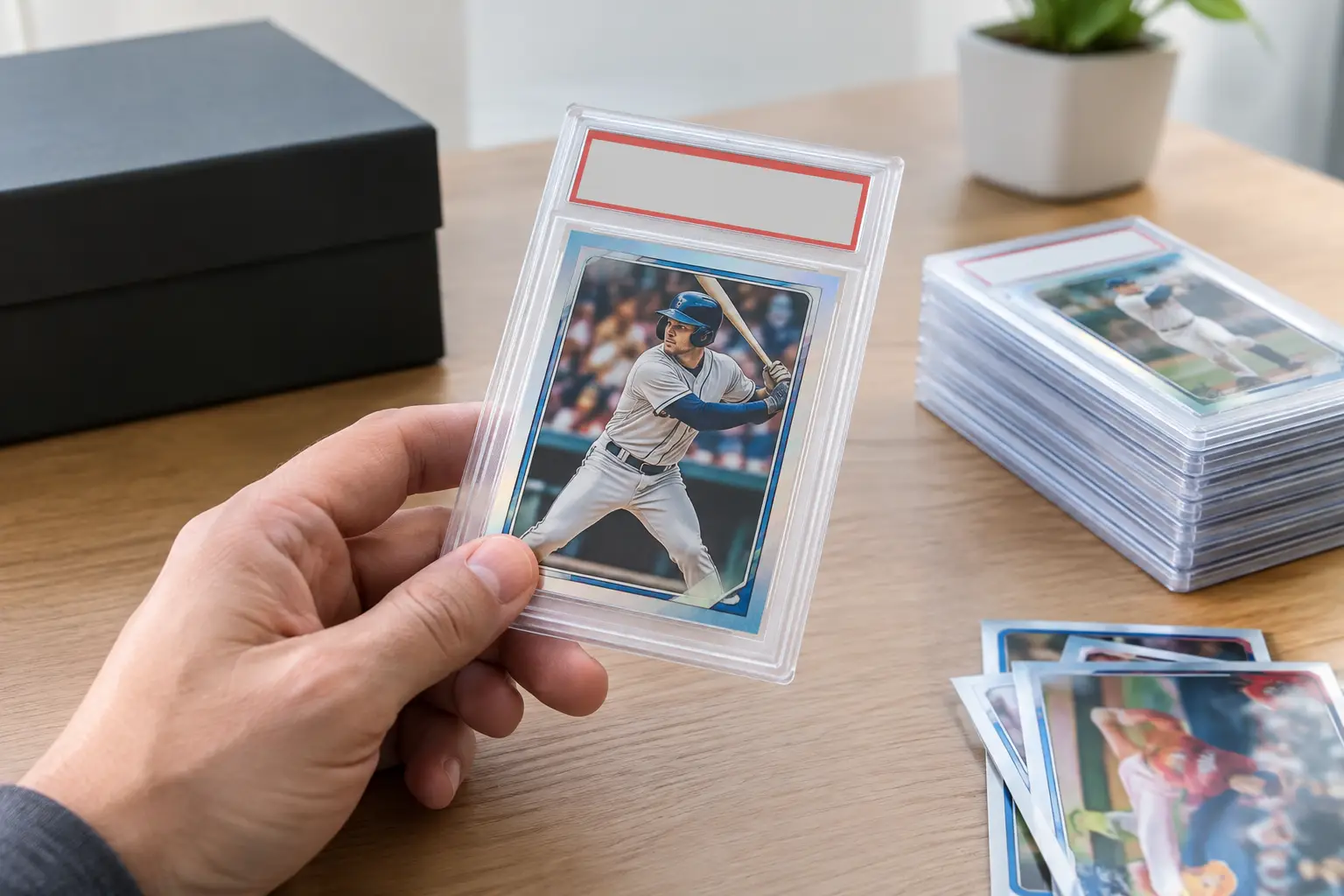
That fresh pull looks perfect under the shop lights. Before sending it away, though, card grading is worth treating like a collecting decision, not an automatic next step. A slab can protect a favorite card and make its condition easier to trust, but grading fees, turnaround time, and the final grade can change whether it makes sense.
For Pokémon, One Piece, and sports card collectors, the right answer depends on the specific card, its condition, and what you want from your collection. Some cards belong in a binder. Some belong in a top loader. A select few may be great candidates for a slab.
What Card Grading Actually Does
Professional grading companies examine a card, assign a condition grade, authenticate it, and seal it in a tamper-evident plastic holder. The label typically identifies the card and set, then displays the grade. Most modern grading scales run from 1 to 10, with 10 representing a near-flawless example under that company’s standards.
The big value of a graded card is consistency. When a buyer sees a card in a recognized holder, they do not have to rely only on listing photos or a seller’s idea of "near mint." The slab also provides long-term protection from fingerprints, surface wear, bent corners, and accidental damage.
That does not mean every graded card becomes valuable. Grading confirms condition. It does not create demand for a card that collectors are not chasing in the first place. A common modern card with a 9 may be a nice personal collection piece, but its added value may not cover the grading cost.
What Graders Look For
A card can look clean at first glance and still fall short of a top grade. Graders inspect several details, often under bright light and magnification: centering, corners, edges, surface, print quality, and possible alterations.
Centering
Centering is the balance of the artwork and borders from left to right and top to bottom. Modern Pokémon cards make centering fairly easy to spot because of their borders, while some sports designs require a closer look at the image placement and text. A card can be pack fresh and still have off-centering straight from the factory.
Corners and edges
Soft corners, tiny white spots, edge chipping, and small dents are common reasons cards miss a 10. Dark-bordered cards can be especially unforgiving because whitening shows quickly. Foil cards may also reveal edge wear that is easy to overlook until they are tilted under a light.
Surface and print quality
Surface flaws include scratches, print lines, roller marks, dimples, stains, and fingerprints. Holos and textured cards are often difficult here. A card may be centered beautifully, yet a faint print line or small indentation can lower the grade significantly.
Different grading companies have their own standards and reputation in the hobby. A 10 from one company is not always viewed exactly the same as a 10 from another. Before submitting, look at recent sales for the exact card and grade you expect, not just the highest price attached to a perfect copy.
When Is Card Grading Worth It?
Start with the card’s raw value and the likely grade, then compare that with grading fees, shipping, insurance, and the time your card will be away. This is not about predicting the market perfectly. It is about avoiding a surprise where a card returns in a slab but has less resale value than the total cost of grading it.
Grading often makes sense for high-demand chase cards, notable rookie cards, scarce parallels, vintage cards, autographs, and personal favorites you want protected for years. A clean alternate art Pokémon card, a sought-after One Piece manga rare, or a key sports rookie can all be reasonable candidates if the condition is strong.
It can make less sense for lower-value modern cards, heavily played cards, or cards with obvious flaws. That does not make them bad cards. Plenty of collectors would rather keep a favorite card accessible in a binder, use it in a deck, or spend the grading budget on more singles and sealed product.
The expected grade matters. The difference between a 9 and a 10 can be dramatic for certain modern cards, while on other cards the gap is modest. Vintage is different too. A lower grade may still be desirable when the card is genuinely scarce and clean copies are hard to find.
Check Your Card Before You Submit
Give a potential submission a careful look before spending money. Handle it only by the edges on a clean, dry surface. Use a soft light at an angle to check for surface scratches and dents. Then inspect the front and back centering, corners, and edges without rubbing or attempting to clean the card.
Do not use household cleaners, tape, erasers, or anything that could alter the surface. Attempts to improve a card can cause damage or lead to an altered-card designation. If there is dust on a sleeve, replace the sleeve rather than trying to polish the card itself.
For protection, use a new penny sleeve and a semi-rigid card holder if the grading company requests one. Avoid forcing cards into tight holders, especially textured or thicker premium cards. Follow the submission company’s current packaging instructions exactly, since requirements can differ.
If you are unsure whether a card is clean enough to send, get a second opinion from another collector. At Waterfront Card Shop, that conversation is part of the hobby. Sometimes a quick condition check helps you spot an issue you missed. Other times it confirms that a card is worth protecting.
Choose a Grader Based on Your Goal
There is no single best grading company for every card or every collector. The best choice depends on what you value most: resale demand, label style, turnaround time, price, authentication confidence, or building a consistent personal collection.
For a card you may sell later, research which grading company buyers prefer for that category. Sports collectors may prioritize different slabs than Pokémon collectors. For a personal collection, the label and holder you enjoy looking at can matter just as much as the market premium.
Be realistic about service levels. Lower-cost submissions may take longer, while faster options can become expensive quickly. Declared value tiers, return shipping, and insurance also affect the total. Sending several cards together can reduce the cost per card, but only if every card is a worthwhile submission.
Buying Graded Cards: Read the Label, Then Read the Card
Buying a graded card can be a great way to know exactly what condition you are getting. Still, do not shop by the number alone. Look at the grader, the card’s certification details when available, the label description, and clear photos of the actual slab.
A 9 is not automatically a bargain, and a 10 is not automatically a smart purchase. Compare it with raw copies and recent sales of the same card. For vintage cards, inspect eye appeal too. Two cards with the same grade can look noticeably different, especially when centering, print quality, or surface presentation varies.
Also check the slab itself. Cracks, scratches, loose cards, and damaged labels affect how a graded card displays and may complicate resale. The holder protects the card, but it is still part of what you are buying.
Grading for Collectors, Not Just Resellers
The best reason to grade a card may have nothing to do with selling it. Maybe it is the Charizard you pulled with your kid, the first big hit from a One Piece booster box, or a rookie from the player you have followed for years. A slab can turn that card into a display piece and keep it safe through moves, trades, and everyday handling.
That personal value is real, even when the numbers do not line up like an investment calculation. Just go in with clear expectations. Grade cards because you enjoy the protection, presentation, authentication, or potential market benefit - not because every card is guaranteed to rise in value.
Before you pack up a submission, ask one simple question: would you still be happy to own this card in a slab if it comes back one grade lower than you hope? If the answer is yes, you are probably making a collecting decision you will feel good about.