
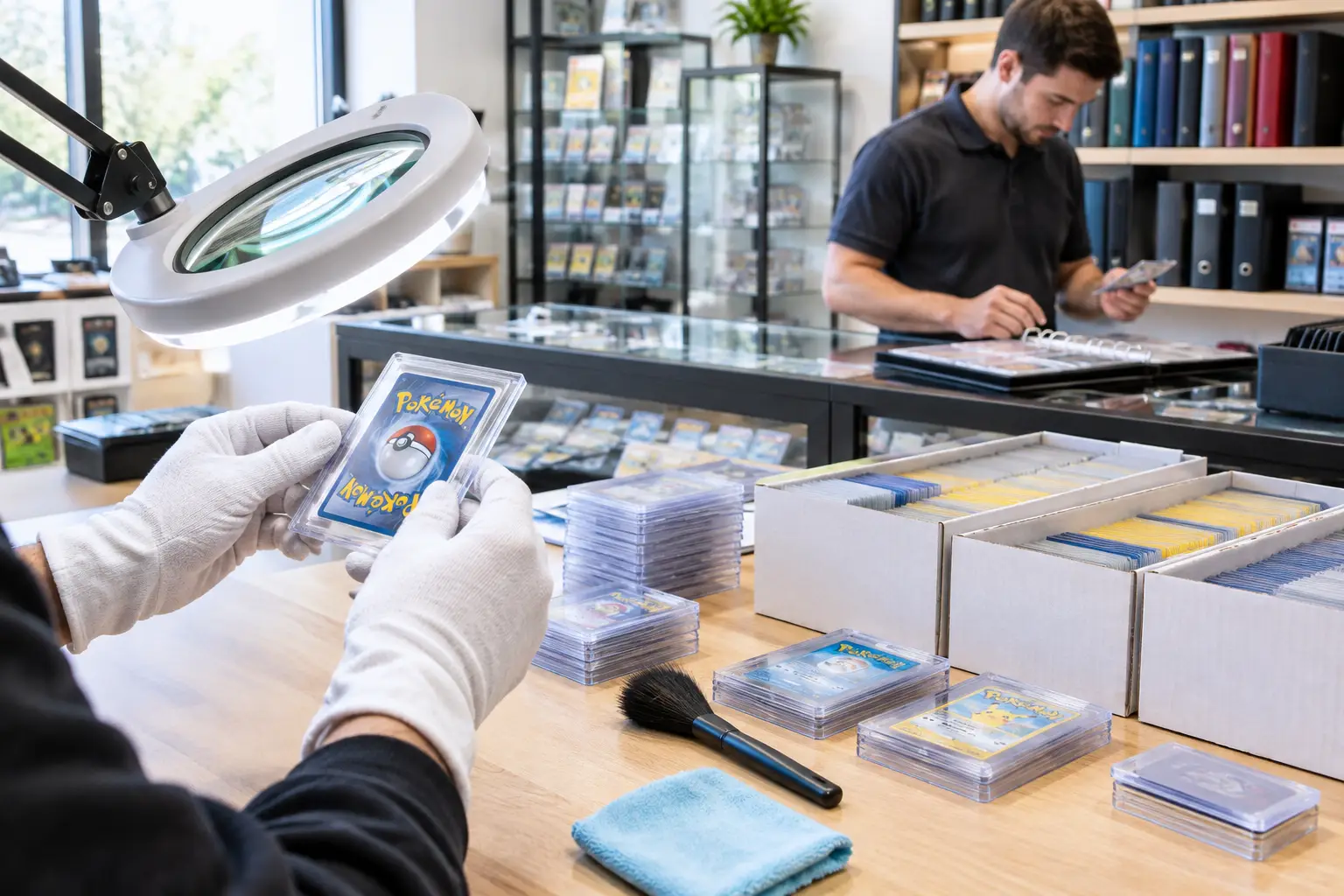
A card can look perfect across the counter, then show whitening, a surface scratch, or a tiny dent once it catches the light. That is why a solid Pokemon card condition guide matters before you buy a single, make a trade, or price a card from your binder. Condition is not just a label. It affects collector appeal, resale value, grading potential, and whether a card feels like the right fit for your collection.
For many collectors, a lightly played childhood favorite is still a great pickup. For others, especially those chasing vintage holos, alt arts, or high-end promos, the difference between Near Mint and lightly played can be significant. The key is knowing what you are looking at and setting expectations before money or cards change hands.
Pokemon Card Condition Guide: The Main Labels
Most card shops and online sellers use a familiar set of raw-card condition labels: Near Mint, Lightly Played, Moderately Played, Heavily Played, and Damaged. These terms are useful, but they are not an official Pokémon grading system. A Near Mint card from one seller may have a little more edge wear than a Near Mint card from another.
That is why photos and direct inspection matter. Think of condition labels as a starting point, not a substitute for checking the card itself.
Near Mint
Near Mint, often shortened to NM, means a card has minimal visible wear. It may have a tiny amount of whitening on a corner, an extremely light print line, or a small factory imperfection, but it should present cleanly in normal lighting. The front surface, back, edges, and corners should all be strong.
Near Mint does not automatically mean grading gem mint. A raw NM card can still have off-centering, a subtle scratch, rough cutting, or a small flaw that keeps it from earning a top grade. If your goal is a PSA 10, BGS 10, or CGC Pristine-style result, inspect more strictly than you would for a binder card.
Lightly Played
A Lightly Played card has noticeable but limited wear. Common examples include a few white spots on the back edges, small corner wear, light scratching on a holofoil, or a minor surface mark visible at an angle. The card should still look clean from arm's length and remain fully collectible.
Lightly Played is often the sweet spot for collectors who want a more affordable copy of a favorite card without stepping down to a visibly rough example. For playable cards, it can also be a smart value choice, assuming there are no major structural flaws.
Moderately Played
Moderately Played, or MP, means the wear is easy to see. Expect more edge whitening, several scratches, worn corners, scuffs, or surface marks. A holo may have visible scratching, and the back can show enough wear to stand out immediately.
These cards are usually best for players, budget-focused collectors, or anyone filling a binder without needing a clean display copy. An MP card can still be authentic, legal for play where allowed, and enjoyable to own. It simply should be priced well below a comparable Near Mint copy.
Heavily Played and Damaged
Heavily Played cards show substantial wear, such as broad whitening, heavy scratching, creases, peeling, stains, or pronounced edge damage. Damaged is a separate level for cards with serious issues: bends, dents, tears, water damage, ink marks, major creases, trimmed edges, or peeling layers.
The distinction matters because a crease or dent has a bigger impact than ordinary edge wear. Some players are happy with a heavily played copy of an expensive staple. Most collectors looking for display pieces, trade value, or grading candidates will pass on damaged cards unless the price reflects the flaw.
What to Inspect Before You Buy or Trade
Check a card under bright, indirect light. A phone flashlight can help reveal surface issues, but do not hold it so close that every normal texture looks like damage. Tilt the card slowly and inspect both sides. Holofoil scratches, print lines, dents, and pressure marks often appear only at certain angles.
Start with the back. On modern Pokémon cards, whitening is usually easiest to spot against the blue border. Look closely at all four corners and run your eyes along the edges. A few tiny white flecks may still fall within Near Mint territory, but clusters of whitening are usually Lightly Played or lower.
Then inspect the front for scratches, scuffs, indentations, and holo wear. Dents are especially important because they can be difficult to photograph and can hurt value more than a little edge whitening. Avoid pressing on the card to test for dents. Instead, use reflected light and look for uneven spots in the surface.
Centering deserves its own check. A card can be clean but noticeably off-center, with one border thicker than the opposite side. Centering generally matters most to grading-focused buyers. For a binder collection, a clean card with slightly imperfect centering may still be a better choice than a worn card with ideal borders.
Also watch for factory flaws. Modern cards can have print lines, roller marks, rough cuts, small dots, or tiny nicks right out of a pack. These are still condition issues to many buyers, even though they were not caused by play. Be clear when selling: calling out a factory print line builds more trust than hiding it behind a broad Near Mint label.
Raw Condition and Graded Condition Are Different
A graded card has been examined and assigned a numerical grade by a third-party company. A raw card is ungraded, even if it looks exceptionally clean. Do not treat an ungraded card as a guaranteed 10 because it came straight from a pack or has been stored carefully.
Grading companies evaluate details that may not matter to every collector, including centering measurements, surface flaws, corner sharpness, and edge quality under close inspection. Submission fees, turnaround times, and the chance of receiving a lower grade are all part of the trade-off. Grading makes the most sense when the card has enough value, demand, or personal significance to justify the cost.
If you are buying a raw card specifically to grade, ask for clear front-and-back photos outside of a sleeve and top loader when possible. Request angled photos for holos and textured cards. A seller cannot promise a grade, but good images give you a more honest basis for deciding.
How Condition Changes Value
Condition affects cards differently depending on the card. A modern playable card with many copies available may have only a small gap between Near Mint and Lightly Played pricing. A scarce vintage holo, first-edition card, trophy card, or desirable promo can have a much wider spread.
Eye appeal matters, too. Two cards with the same technical condition label may not feel equally desirable. One Lightly Played card may have a clean front and whitening only on the back. Another may have a scratched holofoil and a distracting corner mark. Collectors often pay more for the cleaner-looking copy, especially when the front artwork presents well.
When trading, compare condition before comparing market prices. A Near Mint card and a Moderately Played card are not equal simply because they are the same character, set, and rarity. Honest condition conversations prevent awkward surprises after the trade is finished.
Protect the Cards You Already Have
The easiest way to preserve condition is to handle cards less and store them correctly. Sleeve valuable singles as soon as you pull or acquire them. For cards you want to keep especially clean, use a penny sleeve inside a rigid holder, semi-rigid holder, or quality binder pocket designed for trading cards.
Avoid loose stacks, rubber bands, damp basements, hot cars, and overfilled binders. Keep binders upright when possible, and choose side-loading pages for cards that matter to you. For decks, use clean sleeves and replace them when they become cloudy, split, or gritty. A worn sleeve can leave surface marks over time.
Waterfront Card Shop collectors often have different goals: a kid building their first Pokémon binder, a player tuning a deck, or an adult hunting a clean nostalgia card. There is room in the hobby for all of those approaches. The best condition is not always the highest condition. It is the condition that matches your budget, your plans for the card, and the standard you want your collection to hold.
Before your next purchase or trade, take an extra minute with the corners, edges, surface, and centering. That small habit makes it easier to buy confidently and makes every card you keep feel like the right one.