
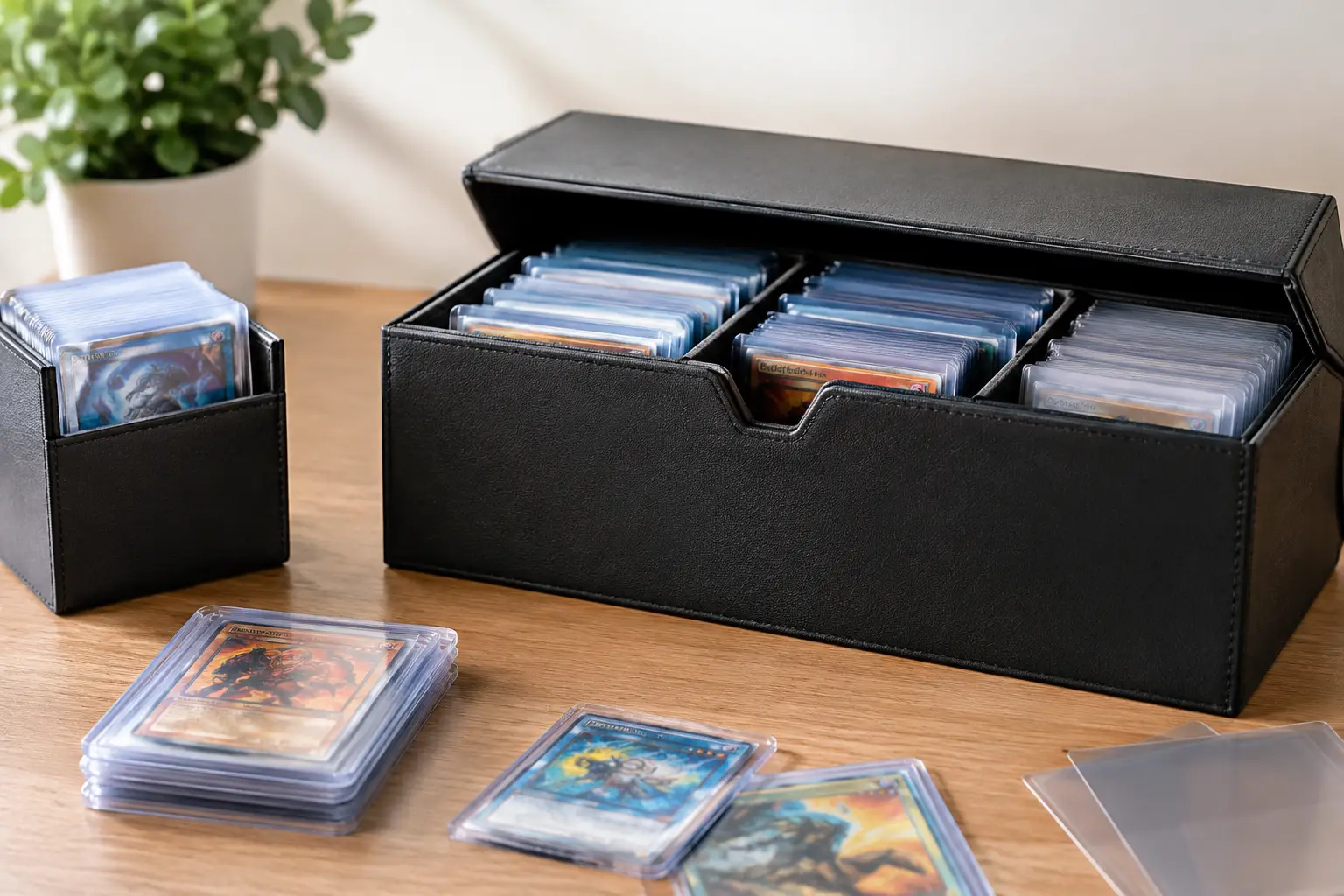
That fresh pull does not stay fresh by accident. Good card storage keeps corners sharp, surfaces clean, and binder pages from turning into a stack of cards you are afraid to touch. Whether you collect Pokémon chase cards, build One Piece decks, rip sports packs, or help a younger collector organize their first hits, the right setup starts with knowing what each card is for.
A $2 holo, a favorite deck card, and a card headed for grading do not need the same level of protection. Spending appropriately lets you protect the cards that matter without turning every common into a museum piece.
Card Storage Starts With Card Purpose
Before buying more supplies, sort your cards into a few practical groups: playable cards, binder cards, bulk, higher-value singles, and cards you may sell, trade, or submit for grading. This one decision makes the rest of your storage setup easier.
Playable cards need consistency. If a deck is sleeved, every card should use the same sleeve type and condition. A bent or noticeably different sleeve can create problems during play, and worn sleeves make a clean deck feel rough fast. Keep active decks in a deck box that fits the cards without crushing them, especially if you use inner sleeves or thicker premium sleeves.
Binder cards are usually the cards you want to look at, show friends, or keep by set. A side-loading, zippered binder is often the best choice for valuable collection pages because it helps limit dust, accidental spills, and cards slipping out of the top. For lower-value set cards, a standard side-loading binder can still work well if it has quality pages and is not overstuffed.
Higher-value cards deserve individual protection. A common approach is a soft sleeve first, then a rigid holder such as a top loader. Cards being prepared for grading may be better in a penny sleeve and a semi-rigid holder, depending on the submission service's current requirements. The point is to prevent movement, surface scratching, and corner wear without forcing the card into a holder that is too tight.
Sleeves Are the First Line of Defense
Every collector should keep penny sleeves on hand. They are inexpensive, easy to use, and useful for most cards worth separating from bulk. Put the card in gently, with clean, dry hands, and avoid pressing down on the surface through the sleeve.
For deck building, use dedicated play sleeves rather than loose penny sleeves. Good play sleeves make shuffling smoother, keep card backs uniform, and protect cards from the friction of regular games. Matte sleeves tend to reduce glare and feel controlled in hand, while glossy sleeves can make artwork pop but may show fingerprints more easily. It comes down to personal preference and how often the deck gets played.
Double-sleeving offers extra protection for decks and cards that see regular handling. An inner sleeve sits close to the card, while an outer sleeve provides the playing surface. It adds thickness, so make sure your deck box actually fits a fully double-sleeved deck. A cramped deck box can bend cards just as surely as no protection at all.
Do not reuse damaged sleeves for cards you care about. Split corners, cloudy plastic, sticky surfaces, and bent edges are signs it is time to replace them. Fresh sleeves are a low-cost upgrade that can make a deck or collection look immediately better.
Choose Binders for Viewing, Not Just Volume
A binder is more than a place to put cards. It is part of how you experience your collection. Nine-pocket pages are familiar and flexible, while four-pocket binders make a strong choice for younger collectors, smaller sets, or cards with larger visual appeal. Twelve-pocket pages can store a lot, but the larger format is less convenient if you want something easy to carry to the shop or trade night.
Side-loading pockets are preferred for cards with value because the opening faces inward once the binder is closed. Zippered binders add another layer of protection, especially when a binder travels in a backpack or sits near other hobby gear. If you use ring binders, be selective. Cheap rings can pinch pages and dent cards near the spine. A fixed-page binder eliminates that risk, though you give up the ability to add or rearrange pages later.
Avoid loading a binder beyond its intended capacity. When pages bow or the cover will not close naturally, cards are under pressure. That can cause warping, edge wear, and impressions from neighboring cards. If your collection outgrows a binder, that is a good problem to have - start the next volume instead of forcing more cards into the first one.
Top Loaders, Semi-Rigids, and Magnetic Holders
Rigid holders are useful, but each type has a job. Top loaders are the everyday favorite for protecting a sleeved single. They are sturdy, inexpensive, and easy to store in designated boxes. Use a soft sleeve first so the card is not rubbing against hard plastic.
Semi-rigid holders are more flexible and are commonly used for cards that may be graded or shipped. They offer protection while making it easier to remove a card safely. Because sizes and policies can vary, always check the current requirements before packing a grading submission.
Magnetic holders are best for display cards you want to enjoy outside a binder. They can look great on a shelf or in a display case, but choose the correct thickness for the card. A standard card forced into a holder meant for a thicker card may shift around. A thicker relic, patch, or special card forced into a standard holder can damage edges or corners. Also, make sure the holder is designed for trading cards and does not use a surface that can scratch the card.
Store Bulk So It Stays Usable
Bulk does not need premium protection, but it does need order. Cardboard storage boxes are practical for commons, uncommons, duplicates, deck-building cards, and sorted trade inventory. Label boxes by game, set, color, era, or card type based on how you actually search for cards later.
For example, a Pokémon player may prefer sections for Energy, Trainers, and Pokémon by type. A set collector may want cards sorted by set and card number. Sports collectors may organize by year, sport, team, or player. There is no perfect system if it makes finding cards harder for you.
Keep bulk upright and snug enough that it does not slump, but not so tight that cards scrape when removed. Dividers are worth using. They save time, help younger collectors maintain their own sorting system, and stop one large box from becoming a mystery pile after a few trade sessions.
Protect Cards From the Room, Too
The storage supply matters, but the room matters just as much. Cards and paper products do not like extreme heat, humidity, direct sunlight, or major temperature swings. A basement, garage, attic, or car can be risky, particularly through a Massachusetts summer or winter.
Keep cards in a dry, climate-controlled area of the home whenever possible. Store boxes and binders off the floor in case of leaks or flooding. Avoid placing them against exterior walls, near radiators, or in direct sun. If the room feels damp, address the moisture problem rather than assuming plastic holders will solve it.
Food and drinks are another avoidable risk. One spilled soda can ruin a binder, a deck box, and a stack of cards in seconds. Use a separate table space for snacks when you are sorting, trading, or opening packs.
Build a Setup That Can Grow
You do not need to buy every supply at once. Start with sleeves, one quality binder or deck box, a few rigid holders for your best pulls, and a labeled bulk box. As your collection grows, add storage based on what you are actually collecting and playing.
Waterfront Card Shop sees the difference a little organization makes: collectors are more confident trading cards they can find, players arrive with protected decks, and parents can keep a growing hobby from taking over every table in the house. Protect the cards you love first, then build a system simple enough that you will keep using it after every pack opening.