
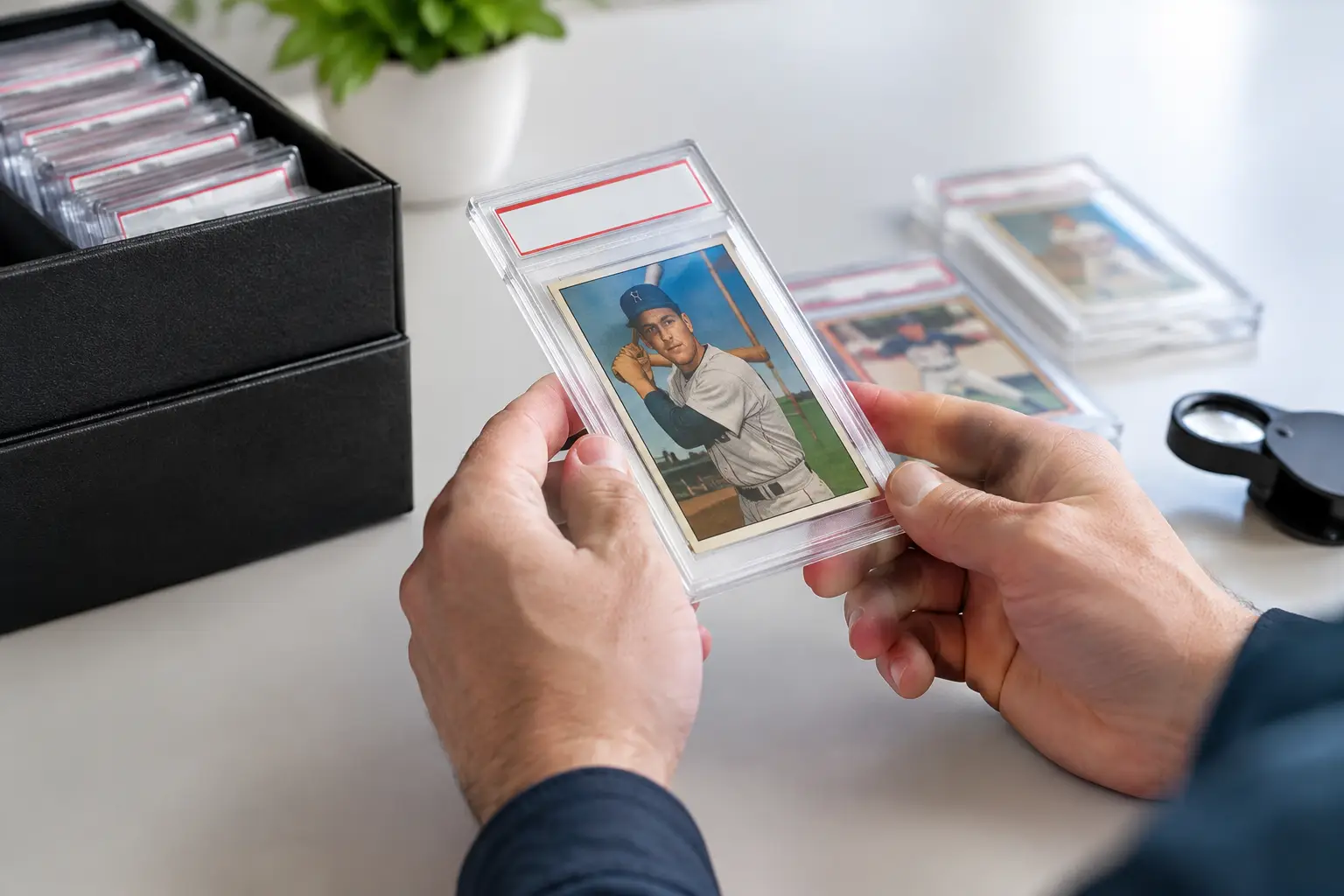
That fresh pull can look like a future gem mint the second it hits the table. Before it goes into a submission order, though, a grading service review should start with the card itself, not the label you hope to see on it. Centering, corners, edges, surface wear, print lines, and even a tiny dent can make the difference between a strong grade and a costly surprise.
Card grading can protect a personal favorite, make a high-value card easier to sell, or give a collection a cleaner long-term home. It can also eat into the value of a card that did not need to leave a penny sleeve. The right move depends on the card, your goal, and the service you choose.
What a Grading Service Actually Does
A third-party grading company examines a card's condition, assigns a grade, and seals it in a tamper-evident plastic holder commonly called a slab. The slab typically includes the card name, set, card number, grade, and certification number.
For collectors, that process creates a consistent condition reference. A near-mint card means different things to different buyers. A card authenticated and graded by a recognized company gives buyers a more familiar baseline, especially when the card is expensive, vintage, or difficult to inspect online.
Grading is not a guarantee that a card will rise in price. It is an opinion of condition at the time of review, paired with authentication. Demand still drives the market. A popular Charizard, alternate art, rookie card, or tournament staple has a much better chance of justifying grading fees than a low-demand card with a high grade.
Grading Service Review: PSA, BGS, and CGC
PSA, Beckett Grading Services (BGS), and CGC Cards are the names most collectors will see across Pokémon, sports cards, One Piece, and other modern TCG categories. Each has a place in the hobby, but no single company is automatically best for every card.
PSA: Broadest buyer recognition
PSA is often the default choice for cards headed toward resale. Its slabs are widely recognized, and PSA-graded Pokémon cards in particular tend to have strong buyer familiarity. That matters when you are listing a card online or trading at a show, because fewer people need an explanation of what they are looking at.
The trade-off is that PSA can be demanding on small flaws, especially on modern cards where collectors expect very clean copies. A card that looks perfect in a binder may still miss the grade you expected because of centering, a faint surface issue, or corner wear visible under magnification. Service levels, pricing, and turnaround estimates can also change, so check current submission details before building your order.
BGS: Strong appeal for premium condition
BGS is known for its subgrades and its premium black-label 10, a grade that carries serious collector attention when it appears. Subgrades can be useful for someone who wants to see how a card performed in centering, corners, edges, and surface rather than receiving only one overall number.
That detail comes with a trade-off. BGS slabs and specific grade tiers can be more selective in certain buyer circles, and resale depends heavily on the card and exact result. A standard BGS grade may not always be the best fit if your only goal is broad liquidity. For an exceptionally clean modern chase card, however, the upside can be compelling.
CGC Cards: A practical option for many collectors
CGC Cards has become a familiar choice in the TCG market, especially for Pokémon and other non-sports cards. Collectors often like its clear presentation, grading consistency, and established presence across comic and card collectibles.
CGC can make sense for cards you want protected and authenticated without treating every submission as a high-stakes resale play. As with any grader, check how comparable cards sell in the specific CGC grade you expect. The company name matters, but the card's demand, condition, and grade matter more.
Decide Why You Are Grading Before You Submit
The same card can make sense for grading in one situation and not in another. If you are preserving a childhood holographic card, the slab may be worth it even if grading costs exceed its market value. You are paying for protection and presentation, not strictly profit.
If resale is the goal, start with the realistic value of the card at several possible grades. Do not calculate only the value of a 10. Look at what a 9, an 8, or an authenticated-but-lower-grade copy sells for, then subtract grading fees, shipping, insurance, marketplace fees, and the time your card will be away.
For players, grading is usually not the first move. A raw copy is easier to use in a deck and often more affordable to replace. Grade a card when it has moved from playable piece to collection centerpiece.
How to Pre-Check a Card at Home
You cannot fully grade a card from your desk, but you can catch obvious reasons not to submit. Use a clean, well-lit space and handle the card by its edges. A soft light at an angle is especially helpful for seeing surface scratches, dents, scuffs, and print lines.
Check the front and back centering. Then look carefully at all four corners and edges for whitening, fraying, chipping, or soft spots. Modern Pokémon cards can also have factory defects, including rough cuts and surface marks. Vintage cards may show holo scratching, silvering, or print defects that are easy to miss in a binder page.
Do not clean, alter, or attempt to press a card unless you understand the risks. Wiping can add scratches. Trimming, recoloring, or other alterations can lead to an altered designation or a rejected submission. When the card is valuable, leaving it alone is usually the safer call.
Costs and Turnaround Times Change the Math
A grading fee is only part of the submission cost. You may also pay for shipping to the grader, return shipping, insurance, supplies, and potential upcharges if the card's declared value exceeds the selected service tier. Group submissions can reduce some costs, but they also require trust and clear handling procedures.
Turnaround time deserves the same attention. If you need a card available for a local show, a gift, or a specific market moment, grading may not fit the deadline. Estimated turnaround windows are not guarantees, and companies can adjust them as submission volume changes.
For lower-value cards, consider whether a quality one-touch holder, penny sleeve, and semi-rigid sleeve provide the protection you need without the added cost. Not every clean card needs a slab. A well-organized binder collection can be every bit as satisfying.
Build a Smarter First Submission
Your first order does not need to be huge. Start with a small group of cards where the reason for grading is clear: a vintage holo you want preserved, a clean modern chase card, a key sports rookie, or a favorite card with sentimental value.
Keep a simple record of each card, its condition notes, declared value, submission tier, and expected return. Photograph the front and back before packing. Use the holder type requested by the grading company, follow its packing instructions exactly, and insure the package appropriately. A card can be flawless when it leaves your hands and still be damaged by poor shipping prep.
If you are unsure whether a card is worth sending, get a second set of eyes from someone who understands condition. At Waterfront Card Shop, that kind of collector conversation is often more useful than chasing a fast answer. The hobby rewards patience, especially when a submission fee is on the line.
The best graded cards are not always the most expensive ones. Sometimes the right card to slab is the one you will be glad to pull out and admire ten years from now.