
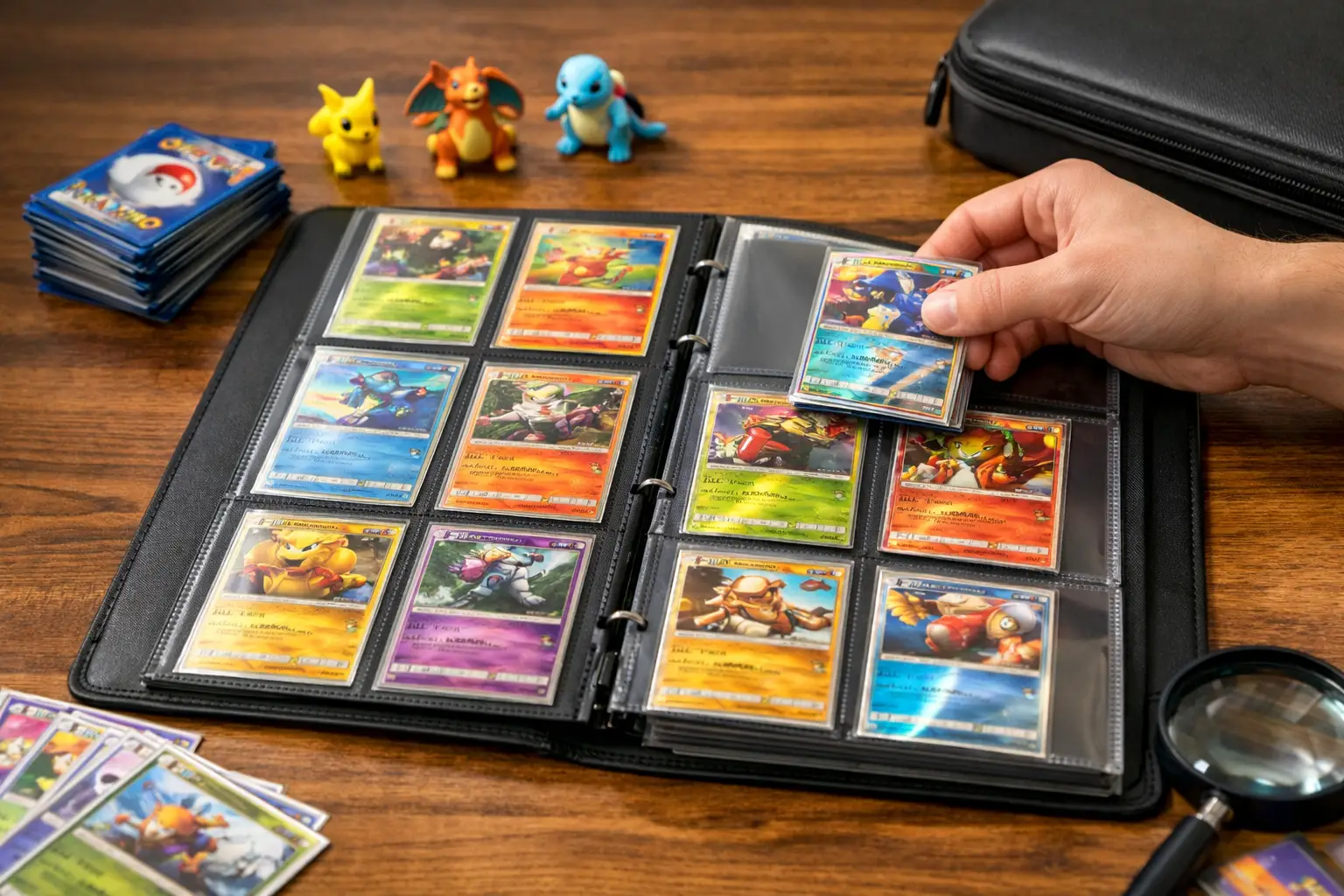
A binder can turn a stack of pulls into a collection you actually want to flip through. It can also become a frustrating mix of duplicates, loose reverse holos, and cards that no longer fit the plan. The best way to organize Pokemon card binder pages is to decide what the binder is meant to show before you fill the first pocket.
That sounds simple, but it matters. A master set binder needs a different layout than a favorite-Pokemon binder, a trade binder, or a deck staple binder. Trying to make one binder do every job usually leaves you constantly moving cards around.
Start With the Binder’s Job
Before sorting anything, choose one clear purpose. If you are building a master set, the goal is complete set order: every regular card, reverse holo, and any variant you personally count toward completion. If you collect favorite Pokémon, you may organize by Pokédex number, evolutionary line, artwork, or era.
A trade binder should look different. Put cards you are comfortable moving near the front, group them by value range or category, and avoid filling it with sentimental cards you would regret trading. For players, a deck binder works best when cards are easy to find by type, Trainer category, or format legality.
There is no single “correct” collector layout. A clean binder that makes sense to you is better than a technically perfect system that becomes a chore to maintain.
Choose Binder Materials That Protect the Cards
Organization is only useful if your cards stay in good condition. Use a side-loading binder with archival-safe, PVC-free pages whenever possible. Side-loading pockets help prevent cards from sliding out when the binder is carried or stored upright.
For holo cards, higher-value pulls, textured Ultra Rares, and cards you may grade later, put the card in a penny sleeve before it goes into the binder pocket. This adds a layer of protection against surface scratching and binder friction. A sleeved card may fit tightly in some pages, though, so do not force it. If the pockets bow or the page feels stretched, switch to pages designed for sleeved cards.
Avoid overstuffing. One card per pocket is the safe standard unless the page is specifically made for double-sided storage. Ring binders can work for low-value bulk or temporary sorting, but cards near the rings can bend or dent if the binder is overfilled. For a long-term collection, a fixed-page zip binder is usually the easier choice.
Store binders flat or upright with enough support that they do not lean hard. Keep them away from basements, attics, sunlight, drinks, and temperature swings. New Bedford humidity can be tough on paper collectibles, especially if a binder is left in a damp storage area.
How to Organize Pokemon Card Binder Pages by Set
Set order is the classic approach for collectors working on modern expansions. It makes gaps obvious, helps with want lists, and creates a satisfying reveal when each page fills up.
Start with the set’s card number. For example, a card numbered 041/182 goes after 040/182 and before 042/182, regardless of its rarity. Regular numbered cards come first, followed by secret rares if you collect them. Keep promotional cards, stamped cards, and special releases in their own section unless they are part of the specific set goal.
Decide early how you will handle reverse holos. Some collectors place the regular version and reverse holo version side by side. Others put reverses behind their matching regular card, especially when pocket space is limited. Either system works, but mixing methods halfway through makes the binder harder to read.
Leave space for cards you do not own yet. Empty pockets are not a failure - they are a clean visual want list. If leaving blanks bothers you, use small divider cards or place a note behind the pocket identifying what belongs there. Just do not use adhesive labels directly on a card or inside a pocket where they can leave residue.
Plan for Special Rarities
Modern Pokémon sets can have full arts, Illustration Rares, Special Illustration Rares, Hyper Rares, and other parallel treatments that sit outside the main numbering. Set aside enough pages before you start. Otherwise, you will hit a big pull and have to shift half the binder to make room.
If you are not chasing a true master set, be specific about your finish line. A “regular set plus favorite hits” binder is a great collecting goal and usually much more affordable. Your collection does not need every possible variant to feel complete.
Organize by Pokémon, Type, or Artwork
Not every binder needs to follow set numbers. A personal collection binder is often more fun when it tells a story.
A favorite-Pokémon binder can begin with early-era cards and move into modern releases, or it can group cards by evolution. A Pikachu collection, for example, might start with base-style artwork and continue through promos, trainer gallery cards, full arts, and recent special sets. Putting duplicate artwork or multiple language versions next to each other can make the page more interesting than strict release order.
Organizing by Energy type is useful for players and younger collectors. Keep Fire, Water, Grass, Lightning, Psychic, Fighting, Darkness, Metal, Dragon, and Colorless in separate sections, then sort within each type by evolution line or card number. Trainers can sit at the back, divided into Item, Supporter, Stadium, and Tool cards.
Artwork binders are another strong option. Some collectors build pages around specific illustrators, card art themes, or Pokémon regions. This approach is less about checklist completion and more about making the binder feel personal. The trade-off is that it takes more maintenance when a new card fits an existing theme.
Keep Duplicates From Taking Over
Duplicates are part of opening packs, especially when you are chasing a set. The key is separating collection copies from extras right away.
Keep the cleanest copy in the binder. Centering, corners, surface condition, and print quality matter most for cards you may eventually grade or trade at a higher level. Put the remaining copies into labeled storage boxes by set, rarity, or type. This keeps your main binder clean while making duplicates easy to find when someone asks to trade.
For inexpensive commons and uncommons, a card storage box is usually more practical than spending binder space. You can keep a few playable copies accessible, then move the rest into bulk storage. Save binder pages for cards you want to display, track, or trade.
Build a Trade Binder People Can Read Quickly
A trade binder is a conversation starter at a local card shop, but it should be easy for both people to browse. Group cards in a way that makes value and interest easy to scan. High-interest hits can go toward the front, followed by full arts, ex cards, promos, vintage, and lower-value cards.
Do not place a card in your trade binder unless it is actually available. If a card is “maybe for trade,” keep it in your personal binder instead. It prevents awkward negotiations and helps you know what you are willing to move.
Condition should be clear, especially for older cards. A card with whitening, creases, or noticeable scratches can still be collectible and playable, but it should not be presented as near mint. Bringing your binder to Waterfront Card Shop can be a good way to compare cards, talk through condition, and find the pieces that fit your collection goals.
Leave Room for the Collection to Change
The best binders are built with a little flexibility. Leave a few empty pockets at the end of each section, especially for active sets or favorite Pokémon that receive new cards regularly. You do not need to reserve half a binder, but one spare page can save a major reshuffle later.
Review the layout after a new release, a trade night, or a larger purchase. Move cards only when the new arrangement makes the binder easier to enjoy. Constantly reorganizing for tiny changes can create unnecessary handling and increase the chance of edge wear.
A simple inventory list can help for higher-value cards. Write down the card name, set, card number, condition, and where it is stored. This is useful for insurance records, trading decisions, and remembering which cards are in a binder versus a top loader or storage box.
Make the First Page Count
Your first page sets the tone when you open the binder. Some collectors use it for their best pulls. Others use it for a favorite evolution line, a complete nine-card art layout, or the first nine cards in a master set. There is no wrong answer, but make it intentional.
A well-organized binder is not just storage. It is a way to see your progress, protect the cards you care about, and make the next pack, trade, or single pickup feel connected to a bigger collection. Leave a little room for the card you have not found yet.