
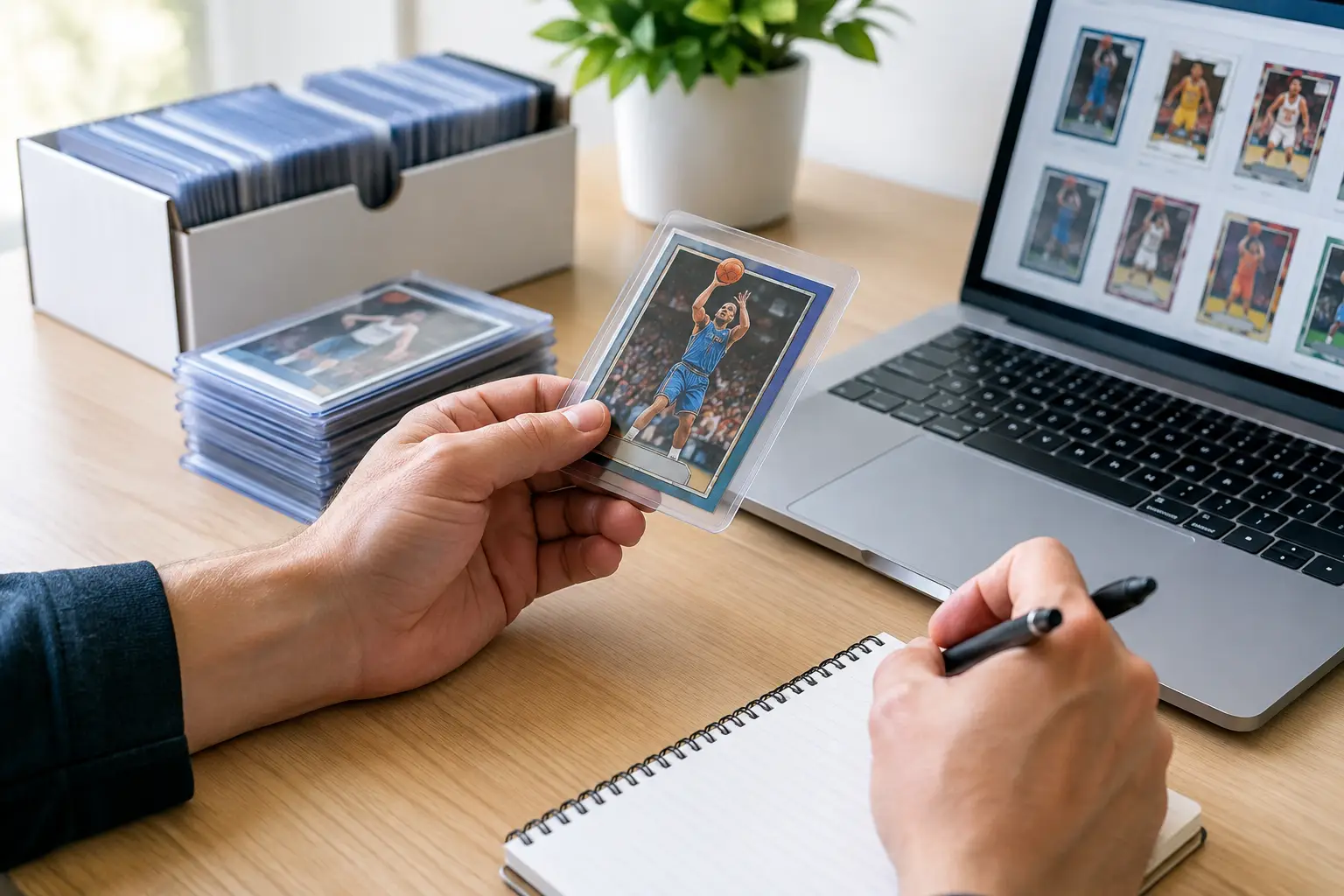
A card can have a $5 listing, a $12 recent sale, and a $20 asking price all at once. Knowing how to price card singles means figuring out which number reflects what a real buyer is likely to pay - not just picking the highest number you can find.
Whether you are building a Pokémon deck, chasing an One Piece card, completing a sports set, or clearing binder space for your next pickup, good pricing starts with the same idea: a card is worth what the market supports in its actual condition at that moment.
Price Card Singles Using Real Market Data
The fastest way to misprice a card is to use active listings as your only reference. Listings show what sellers hope to get. Sold listings show what buyers have actually paid.
Start by matching the card as closely as possible. Check the player or character, set name, card number, parallel or holo treatment, language, grading company if applicable, and condition. A standard base card, reverse holo, full art, alternate art, and numbered parallel may share a name but have completely different markets.
Look at several recent completed sales rather than one result. One sale may be unusually low because the seller needed a quick sale, while another may be high because two buyers competed at the right time. A cluster of comparable sales gives you a more useful range.
For a clean, raw card with regular sales, the middle of that range is usually a fair starting point. If the card has strong demand, limited supply, or exceptional eye appeal, it can land toward the higher end. If it has visible wear or is moving slowly, expect the lower end to be more realistic.
Sold prices matter more than asking prices
A $100 listing does not make a card a $100 card. If recent copies actually sold between $62 and $75, that is the market you should work from. This matters especially for chase cards, older Pokémon holos, rookie cards, and low-population graded cards, where a few optimistic listings can create a misleading picture.
Also pay attention to timing. A card that sold for a premium during release week may settle once more product is opened. On the other hand, a playable card can rise quickly after a tournament result, a format change, or a new deck release. Recent sales are most useful when they are truly recent.
Condition Can Change the Price Fast
Condition is not a minor detail. For raw singles, it is often the difference between a card that sells quickly and one that sits in a binder.
Near Mint cards are generally clean at first glance, with strong corners, limited surface wear, and no major whitening or creasing. Lightly Played cards may have small amounts of edge wear, light scratching, or minor whitening. Moderately Played and Heavily Played cards can still be great for decks and binder collections, but they need to be priced accordingly.
Be honest with yourself when evaluating a card. Check it under good light, looking at both sides. Corners, edges, centering, foil scratching, dents, print lines, stains, and creases all matter. A small dent can be easy to miss in a photo but can have a major effect on value, particularly for collectors considering grading.
The condition label should match the card, not the price you want. Calling a played card Near Mint may get attention once, but it damages trust when the buyer receives it. Clear condition standards make trading and selling better for everyone.
Raw cards and graded cards are different markets
A graded card is not simply a raw card price plus the grading fee. The grade, grader, card population, and collector demand all shape the result. A PSA 10 modern card may command a substantial premium over raw, while a PSA 8 or 9 might not be dramatically higher than a very clean raw copy.
Do not assume every clean card will grade at the level you hope for. Centering, surface flaws, print lines, and tiny edge issues can affect a grade. If you are pricing a raw card, compare it with raw sales. If you are pricing a slab, compare it with sales for the same grade and grading company whenever possible.
Rarity Helps, but Demand Sets the Pace
Rarity gets attention, but demand is what moves cards. A short-printed parallel of a player with limited collector interest can be harder to sell than a more available rookie card from a popular athlete. The same is true in trading card games: a high-rarity card can cool off while a lower-rarity staple rises because players need copies for competitive decks.
For Pokémon, collector appeal often comes from the Pokémon itself, artwork, nostalgia, set placement, and condition. For One Piece, character popularity, tournament play, and new set releases can all move prices. In sports cards, player performance, rookie status, team market, card serial number, autograph status, and the specific product matter.
This is why price history should be read alongside the hobby conversation. A sudden spike is not always a new normal. It might be one exciting weekend, a social-media moment, or temporary low supply. Likewise, a dip is not automatically a bargain if demand has simply moved elsewhere.
Set a Different Price for Selling, Trading, and Buying
A fair cash sale price, trade value, and shop buy price are not identical numbers. Each type of transaction involves different costs and risks.
When selling directly to another collector, you may price near recent market sales, adjusted for condition and how quickly you want the card to move. Selling online also comes with fees, shipping materials, taxes, chargeback risk, and the time it takes to photograph, list, pack, and mail the card.
Trade values are often closer to market value, but the details still matter. A highly liquid card that many collectors want can be easier to trade than a niche parallel with the same comp. If both people are happy with the cards they receive and the values are supported by recent sales, that is a good trade.
A card shop's buy price will typically be below its expected sale price. That is not a trick. The shop takes on the inventory risk, verifies authenticity and condition, stores the card, and needs room to resell it. The upside is speed, convenience, and the chance to turn cards you no longer need into store credit for something you do.
At Waterfront Card Shop, bringing cards in for a straightforward conversation can be especially helpful when you have a mixed binder, are unsure about condition, or want to trade into Pokémon, One Piece, sports cards, or sealed product.
Avoid Common Pricing Traps
The biggest trap is treating every version of a card as the same card. Always confirm the card number and finish before comparing prices. A reverse holo can look close to a standard holo, while a numbered parallel may have a tiny detail that changes its value completely.
Another mistake is ignoring language. English, Japanese, and other language versions often have separate markets. Do not use a Japanese comp to price an English card without understanding the difference in demand and supply.
Finally, do not price solely around a future prediction. Cards can rise, fall, or stay flat for reasons no one can fully control. Buy the cards you enjoy, build the deck you want to play, and use market data to make fair decisions rather than promises about returns.
When a Price Range Is Better Than One Number
Some singles are easy to price because they sell frequently. Others are not. Vintage cards, rare error cards, unusual sports parallels, and high-grade slabs may have too few recent sales to support one exact number.
In those cases, build a range. Consider the most recent comparable sale, the closest condition match, current supply, and how quickly you need to sell or trade. A realistic range gives you room to negotiate without guessing.
The goal is not to squeeze every last dollar from every card. It is to understand what you have, protect the condition, and make the next trade, sale, or binder addition feel right when you look back at it.