
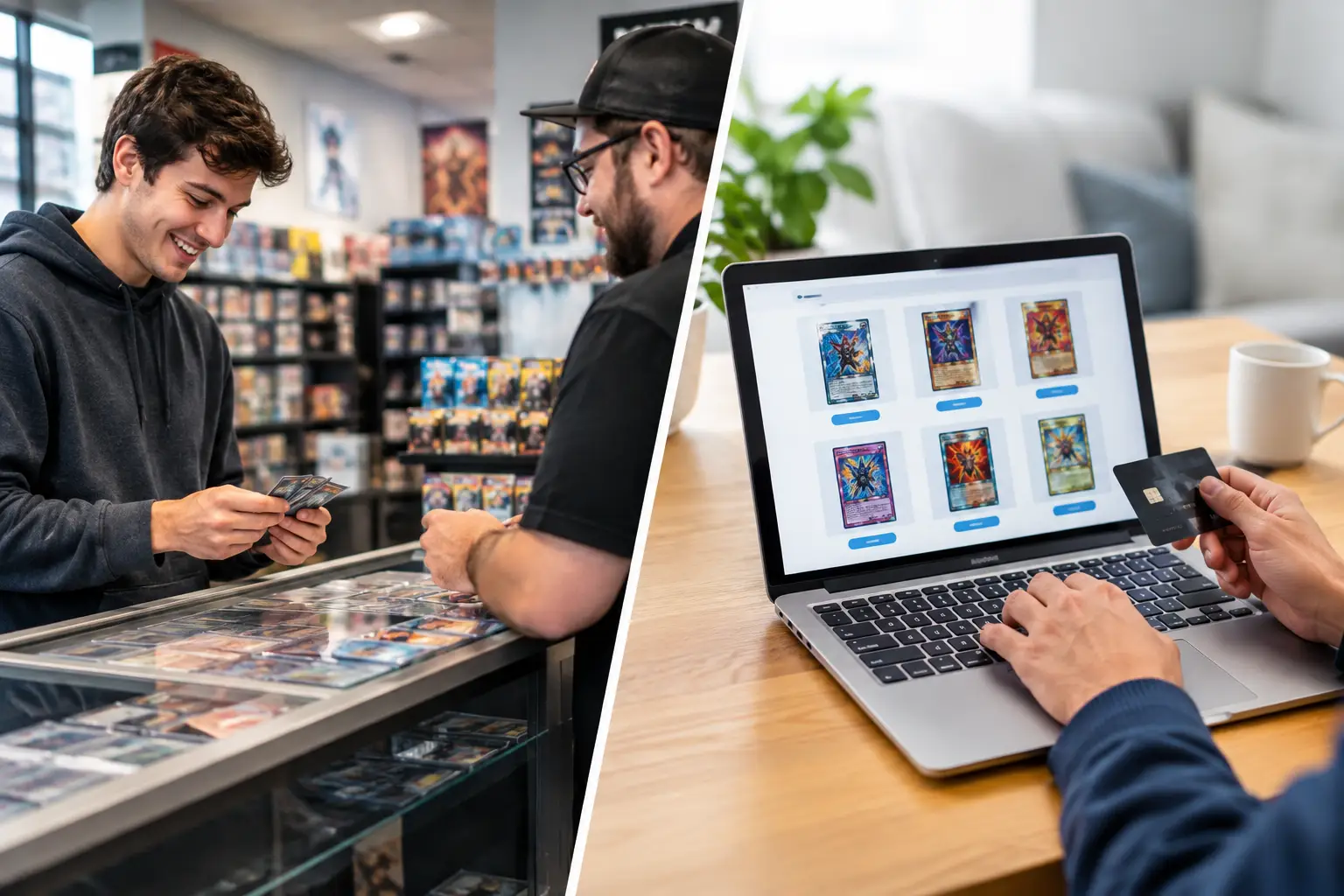
A new Pokémon set drops, the chase cards start hitting social feeds, and every collector faces the same question: where should you buy? For collectors weighing local card shops versus online, the answer is rarely as simple as “whichever is cheaper.” Price matters, but so do authenticity, condition, availability, timing, and having someone knowledgeable across the counter when you need an honest answer.
Online shopping has made the hobby bigger and more accessible. A local shop keeps the hobby personal, immediate, and connected to the people who actually open packs, trade cards, and build decks in your area. The right choice depends on what you are buying and what you want from the purchase.
Local Card Shops Versus Online for Sealed Product
Sealed product is where the comparison usually starts. Booster boxes, Elite Trainer Boxes, tins, collection boxes, sleeved packs, and new releases can appear online at prices that look hard to beat. Large online sellers may move enough volume to run aggressive sales, especially after the opening-week hype cools down.
That does not automatically make online the better value. Shipping, taxes, minimum order thresholds, and delayed delivery can change the final number quickly. A $5 difference on an ETB is less meaningful when you are paying shipping or waiting a week for it to arrive. For a birthday gift, a last-minute tournament upgrade, or release-day excitement, walking into a local shop and leaving with product in hand has real value.
Local card shops also give you a clearer read on what is actually available. You can see which products are moving, ask whether a set is being restocked, and find out what makes sense for your budget. A parent buying Pokémon cards for the first time may not know the difference between a booster bundle and a collection box. A good hobby shop can explain it without turning a simple gift purchase into a research project.
There is a trade-off. A local shop cannot always match the lowest online sale price, particularly when a national retailer is clearing inventory. But specialty stores often price based on current hobby demand, product access, and the ability to keep desirable inventory on the shelf. If you want a reliable place to grab packs, sealed Pokémon, One Piece, or sports cards without chasing restock alerts, that consistency can be worth more than a small discount.
Singles: Condition Is Part of the Price
A card listed online might look clean in a photo and arrive with whitening, surface scratches, poor centering, or a soft corner that was not easy to spot. For inexpensive binder cards, that may not matter. For a vintage holo, an alt art, a high-end sports rookie, or a card you may eventually grade, it matters a lot.
Buying singles in person gives collectors an advantage: you can inspect the actual card before committing. Look at the front under good light, check the back edges, and ask whether the card has been played or pulled recently. This is especially useful when condition affects the value by far more than the difference between two listing prices.
Online marketplaces can still be excellent for singles. They offer huge selection, which matters when you need an obscure card to finish a deck, a specific parallel, or a vintage piece that rarely appears locally. Established sellers often provide detailed scans and condition notes, and buyer protections can help when a listing is inaccurate.
The best rule is simple: the more expensive or condition-sensitive the card, the more valuable in-person inspection becomes. If you are buying a $2 reverse holo for a binder, online convenience may win. If you are spending serious money on a centerpiece card, being able to inspect it can prevent an expensive disappointment.
Authentication and confidence
Counterfeits are part of the trading card market, especially with popular Pokémon cards and high-demand singles. Online platforms have improved their tools, but listings can still be misleading, incomplete, or outright fake. Even sealed product can create concerns when collectors are buying from unfamiliar sellers.
A trusted local card shop has a reputation to protect in the same community it serves. You know where the store is, who you are dealing with, and where to go if you have a question after the sale. That does not mean every online seller is risky. It means that local accountability is a real benefit, particularly for beginners and parents who do not yet know every sign of a fake card or resealed pack.
The Part Online Cannot Package and Ship
Online stores are built for selection. Local shops are built for interaction. That distinction matters more than it sounds.
At a card shop, a collector can ask what set has the cards they are chasing, compare products side by side, trade duplicates, and talk through whether opening packs or buying the single makes more sense. Players can find opponents, hear about local events, and get help refining a deck. Kids can learn hobby etiquette in a setting where the excitement is shared rather than confined to a screen.
That community element is not just a bonus. It helps people stay engaged with the hobby in a healthier way. Opening a pack is fun, but constantly chasing a card through online orders can get expensive fast. A conversation with another collector may point you toward buying the single, trading for it, or choosing a product that better fits your goal.
For New Bedford and the South Coast, a dedicated shop such as Waterfront Card Shop gives collectors a place to make those decisions with people who speak the language of the hobby. Whether you collect for nostalgia, build competitive decks, rip packs with friends, or hunt for the next binder addition, a local counter can be more useful than another search filter.
When Online Is Clearly the Better Move
Being loyal to a local shop should not mean ignoring the strengths of online buying. Sometimes the internet is the practical answer.
Online is often best when you need a very specific card, want to compare a wide range of prices, or are looking for a product that is no longer stocked locally. It can also be useful for collectors building a large want list over time. Rather than driving around for one missing card, you may find everything from a few reputable sellers in one order.
It also helps to watch market timing. Newly released products and chase singles can carry major hype premiums. If you do not need a card immediately, waiting may save money. This applies in local stores and online, but online price history and broad marketplace inventory can make market trends easier to see.
Just shop carefully. Read the listing details, check seller feedback, understand the stated condition, and confirm whether shipping is tracked and insured for valuable purchases. The lowest listed price is not always the best deal if the seller has vague photos, weak feedback, or no clear return policy.
Build a Buying Strategy Instead of Picking Sides
The smartest collectors do not treat local and online as opposing teams. They use each option for what it does best.
Buy sealed product locally when you value immediate access, want help choosing, need a gift now, or want to support a place that keeps the local hobby active. Shop local for cards you want to inspect, trades you want to make, and advice you cannot get from a product listing.
Use online shopping for hard-to-find singles, broader price comparisons, and items that are not available nearby. If an online listing is meaningfully cheaper after shipping and you trust the seller, that is a reasonable choice. The hobby is expensive enough without pretending every purchase has one correct answer.
For new collectors, start with a clear goal before spending. Are you building a deck, filling a binder, collecting a favorite Pokémon, buying a gift, or investing in a higher-end card? Once you know the goal, the best place to buy becomes much easier to identify.
The next time a set catches your attention, do not only ask where the price is lowest. Ask whether you want the card today, whether condition matters, whether you need guidance, and whether the purchase helps you enjoy the hobby beyond the checkout screen. That is usually where the right shop reveals itself.