
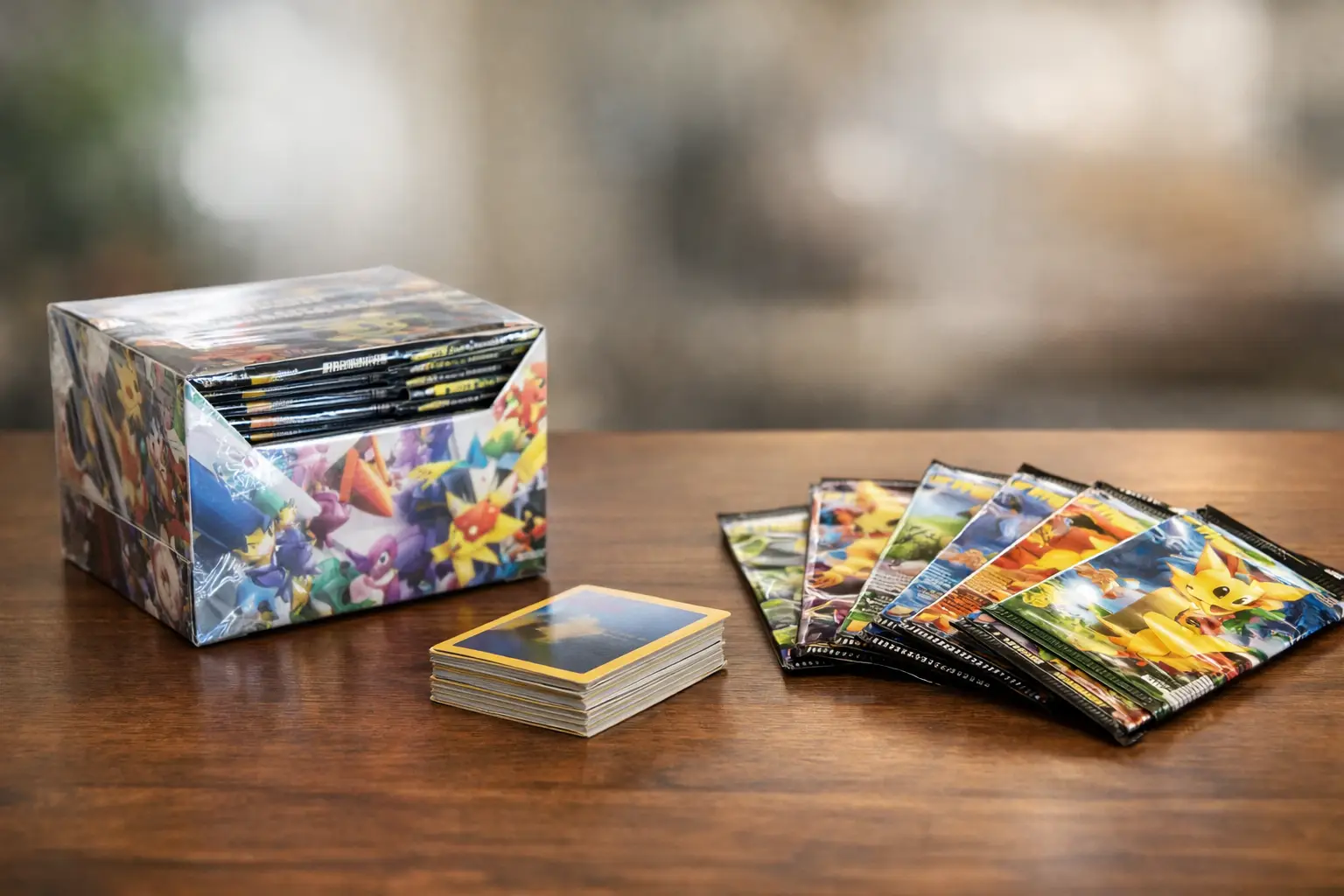
A fresh set lands, the chase cards start filling feeds, and the question hits fast: Pokemon booster box versus packs - what is actually the smarter buy? A booster box gives you a full opening session and a clear per-pack price. Individual packs keep the entry cost low and let you enjoy the set without committing your whole budget at once.
Neither option guarantees the card you want. That is the first rule to remember. The right choice depends on whether you are building a deck, filling a binder, buying a gift, chasing the opening experience, or keeping sealed product in your collection.
Pokemon Booster Box Versus Packs: The Main Difference
A Pokémon booster box is a sealed display containing a set number of booster packs from one expansion. For modern English Pokémon TCG releases, that is commonly 36 packs, though product configurations can vary by era, language, and specialty set. It is made for the collector or player who wants a substantial amount of one set in one purchase.
A loose booster pack is exactly what it sounds like: one pack from an expansion. It offers the same basic chance to pull cards from that set as any other pack, but at a much lower upfront cost. Packs are an easy choice for a quick rip, a small reward, a party favor, or a younger collector who wants to participate without spending booster-box money.
The big difference is not that a booster box contains magically guaranteed chase cards. Pokémon does not publish guaranteed hit ratios for standard booster boxes, and pull rates can move around from set to set. A box simply gives you more attempts and, usually, a better price per pack than buying the same number individually.
What You Are Paying For
With individual packs, you are paying for flexibility. You can buy two today, three next week, and stop whenever you feel like it. That works well when your hobby budget is limited or when you enjoy opening several different sets instead of focusing on one release.
With a booster box, you are paying for volume and consistency. You get a full display from one expansion, which means more commons, uncommons, Trainer cards, reverse holos, and regular holos for deck building and binder organization. If you are trying to learn a new set, a box gives you a much better feel for its artwork, mechanics, and card pool.
When a Booster Box Makes Sense
A booster box is usually the better value when you already know you want a large number of packs from the same standard expansion. The math matters: if the box price brings the per-pack cost meaningfully below single-pack pricing, the upfront spend can be justified for a frequent opener.
It also makes sense for players. Opening 36 packs will not build a tournament-ready deck by itself, but it can give you a deep base of Trainers, Pokémon, Energy, and trade material. Players should still expect to buy singles for the specific cards their list needs. Random packs are fun, but they are a very inefficient way to hunt down four copies of one playable card.
For collectors, a box can turn release weekend into an event. Open it with friends, pace it across several nights, or make it the start of a new binder. There is value in the experience, especially if you enjoy seeing the set come together rather than only checking whether you hit one expensive card.
A sealed booster box can also appeal to collectors who prefer unopened product. Condition matters here. Clean shrink wrap, crisp corners, intact seals, and proper storage all affect collector confidence. Sealed product is not automatically an investment, though. Popularity, print volume, reprints, character demand, and the overall market can all change what a box is worth later.
The Limits of Buying a Box
The risk is simple: a booster box is still randomized. You can open a box with several cards you like and still miss the one chase card that pushed you to buy it. If that specific card is the only goal, check the price of the single before committing to 36 packs.
This is especially true for high-end alternate art, Special Illustration Rare, and hyper-rare cards. A single can sometimes cost less than the amount you might spend opening product and still not pull it. Buying the card directly may feel less dramatic, but it is often the collector move when your target is clear.
Booster boxes are also not available for every Pokémon release. Many special expansions are sold through Elite Trainer Boxes, booster bundles, collection boxes, tins, and other formats instead. If a set does not have a traditional booster box, compare the cost per pack across the products that are available, but remember that promos, sleeves, deck boxes, and accessories add value beyond the pack count.
When Individual Packs Are the Better Call
Individual packs are ideal when you want the fun of opening without turning it into a major purchase. For parents, packs are easy birthday add-ons, report-card rewards, stocking stuffers, or a way to test whether a child is genuinely interested in the hobby. A few packs also leave room in the budget for sleeves, a binder, or a sturdy deck box - items that help protect the cards after the excitement of opening.
Packs are also great for variety. Maybe you want to open a current set, pick up a pack from an older expansion, and try a set you have never seen before. That mixed approach keeps collecting fresh and can be more satisfying than putting every dollar into one release.
If you are new to Pokémon, starting with packs can teach you what you actually enjoy. You may find that you care most about a certain Pokémon, illustration style, rarity type, or deck archetype. Once you know that, you can make bigger purchases with more confidence.
There is one practical caution with loose packs: buy from a retailer you trust. Sealed packs should be clean, intact, and handled properly. Avoid packaging that looks tampered with, unusually loose, resealed, or damaged around the crimps. A dedicated card shop can answer basic set questions, help match a product to your budget, and provide a more reliable place to start than a random listing with no product history.
Pull Rates: More Packs, Not Promises
The phrase “better odds” can be misleading. If every properly sealed pack comes from the same print run and set, one pack has one pack’s worth of chance. Opening 36 packs gives you 36 opportunities, but it does not create a promise that you will pull a particular card.
Some collectors talk about boxes having expected hit ranges based on openings shared by the community. Those observations can be useful as informal context, but they are not guarantees. Pokémon can change collation, set composition, and rarity distribution. Treat every opening as entertainment with collectible upside, not a fixed return.
This matters most when you are budgeting. Decide what you are comfortable spending before you start opening. If a pull misses, do not let frustration turn one box into three. The best collections are built over time, with room for both sealed fun and targeted singles.
A Simple Way to Choose
Choose a booster box if you want to go deep on one standard set, value a lower cost per pack, want bulk for decks or trades, or enjoy making a full opening session out of a release. It is the natural product for regular collectors and players who know they will open plenty of that expansion anyway.
Choose individual packs if you want to spend less upfront, sample several sets, buy a small gift, or keep your opening budget under control. Packs make the hobby accessible, and there is nothing lesser about collecting one or two at a time.
If your goal is one particular card, consider the single first. If your goal is a memorable rip, choose the product that fits your budget and enjoy the surprises. At Waterfront Card Shop, the best starting point is usually the one that leaves you excited to come back for the next pack, trade, deck upgrade, or binder page.