
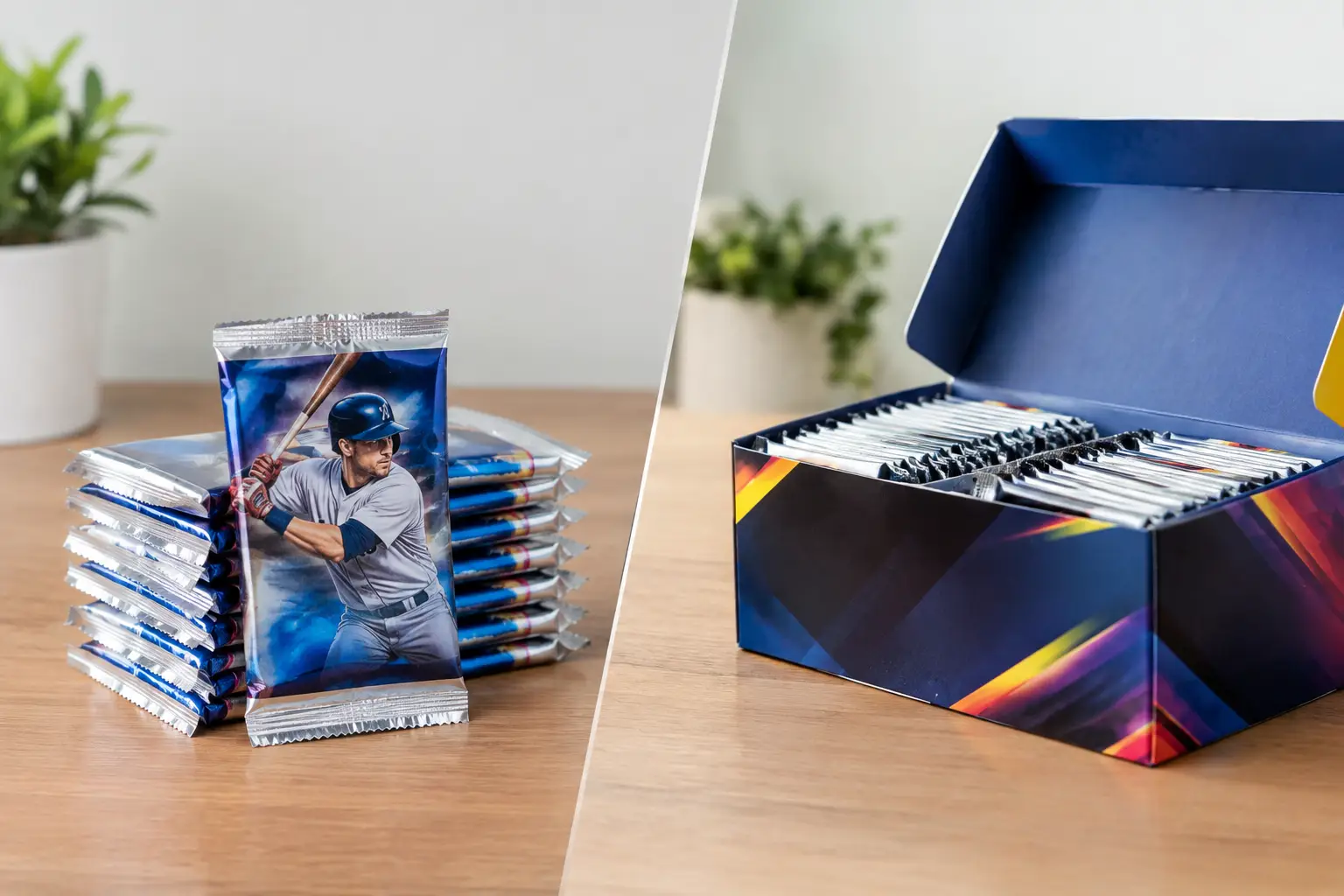
A $5 pack from a big-box shelf and a sealed hobby box behind a card-shop counter can carry the same logo, but they are not always built for the same collector. Retail packs versus hobby boxes is one of the first questions buyers ask when a new Pokémon, One Piece, or sports card release arrives. The better choice depends less on which product sounds more premium and more on what you want from the rip.
Are you opening cards with a child, chasing a favorite player, building a deck, or looking for a specific parallel or autograph? Each goal points to a different kind of product. Knowing the difference helps you spend with more confidence and avoid expecting hobby-box results from a retail blaster - or vice versa.
What retail and hobby actually mean
Retail products are made for broad distribution. You may see single booster packs, blaster boxes, tins, collection boxes, bundles, hanger boxes, and multipacks at mass retailers, grocery stores, and specialty card shops. The exact format changes by brand and release, but retail is usually designed around accessible price points and easy gifting.
Hobby products are generally distributed through card shops and other hobby-focused sellers. In sports cards, hobby boxes often include configurations with special inserts, numbered parallels, memorabilia cards, or autograph chances that are not available in retail. A hobby box may also have stated average contents, such as a certain number of autographs or relic cards per box. Those statements are averages across production, not a promise that every box contains the card you want.
The language can get confusing in trading card games. Pokémon, for example, does not always use the sports-card industry's retail-versus-hobby labels in the same formal way. Pokémon booster boxes are a familiar sealed format sold through specialty channels, while tins, collection boxes, and single packs may appear in more places. One Piece products also have their own release formats and allocation realities. Always compare the actual product configuration, not just the word on the shelf.
Neither category is automatically more authentic, more fun, or a better deal. The product source and condition of the seal matter far more than whether the box is called retail or hobby.
Retail packs versus hobby boxes: the real differences
The biggest difference is usually the checklist. Sports card manufacturers commonly reserve certain card types, colors, serial-numbered parallels, autographs, or premium inserts for hobby formats. Retail can have exclusive parallels of its own, but they are often different from hobby exclusives. If you are chasing a specific rookie-card parallel, look up the checklist before buying anything.
Price is the other obvious separator. Retail lets you enter a release a pack or blaster at a time. That is useful when you want the opening experience without committing to a larger box. It also makes a practical gift for younger collectors who may be happier with several packs, a tin, or a product featuring a favorite Pokémon than with one expensive box.
A hobby box costs more upfront because it often has more packs, a different card mix, and access to hobby-only content. But higher cost does not create guaranteed profit. A box with an autograph guarantee can still contain an autograph from a player who does not fit your collection. A numbered card can still be a card you would rather trade. The premium is for the format and the chance at specific content, not a promise of resale value.
For TCG players, retail can be a perfectly good way to add cards, especially when the product includes useful promos or a good mix of packs. Still, buying singles is usually the most direct route when you need particular cards for a deck. Sealed packs are for the fun of opening and the possibility of a hit. Singles are for finishing the list.
When retail makes the most sense
Retail is a strong fit when the budget is firm and the goal is simple: enjoy opening cards. A blaster box or collection box can turn a birthday, family visit, or Friday afternoon into a shared hobby moment without making every pack feel like a major financial decision.
It is also a sensible choice for newcomers. Before deciding that a product line is your favorite, opening a smaller format can help you learn the set's artwork, card design, players, characters, and pull patterns. Parents shopping for a first Pokémon product often do better with an age-appropriate box, a few packs, and some sleeves than with a high-dollar purchase made solely because it is labeled hobby.
Retail exclusives can matter, too. Some sports releases place distinctive parallels in blasters, hangers, or fat packs, and those cards may appeal to collectors who enjoy a particular color or pattern. The key is buying the retail format for what it actually offers, rather than treating it as a discounted hobby box.
When a hobby box is worth considering
A hobby box makes more sense when you understand the product and have a reason to chase its hobby content. Maybe you collect a specific athlete and want access to a hobby-only autograph checklist. Maybe you enjoy building a personal run of numbered cards. Maybe opening a full box with friends is part of how you enjoy release day.
It can also be the right choice for experienced collectors who value the box-opening experience itself. There is a rhythm to opening a full hobby configuration, sorting inserts, checking serial numbers, and comparing pulls with other collectors. For some people, that is the event they are paying for.
Before buying, check the number of packs, cards per pack, stated box averages, and the exact parallels or inserts available in that format. A hobby box from one product line may be loaded with meaningful hobby-only content, while another may offer only a modest difference from retail. Release-year changes can also be significant, so last year's product details are not always reliable for this year's box.
Odds, value, and the temptation to chase
Pack odds are not a shopping guarantee. Even when a manufacturer prints odds, they describe probability over a large production run. Two blasters can produce wildly different results. Two hobby boxes can do the same. That uncertainty is part of the appeal, but it should also shape the budget.
Set a number you are comfortable spending before you start opening. If your main goal is a single card - a favorite Pokémon illustration rare, a One Piece leader, or a rookie autograph - compare the cost of chasing it in sealed product with the price of buying it as a single. Often, the single is the cleaner choice. Opening packs can still be worthwhile when you value the experience and would be happy keeping, trading, or selling the other cards you pull.
Sealed product also deserves careful handling. Keep boxes dry, avoid crushing corners, and do not assume every unopened item should be saved forever. Some collectors enjoy opening everything; others keep a favorite set sealed. Both approaches are valid when they match your collecting goals.
Buy for your kind of collecting
The best product is the one that fits your reason for being in the hobby. If you are learning a TCG with your child, choose approachable packs and products with cards you will enjoy together. If you are building a tournament deck, prioritize singles and trade extras into what you need. If sports cards are your lane, study the checklist and buy the format that contains the rookies, parallels, or signatures you actually collect.
A good local card shop can make that decision easier because you can ask about a release before you buy. At Waterfront Card Shop, the goal is not to push every collector toward the most expensive box. It is to help you find the product that matches your budget, favorite set, and reason for collecting.
The next time a new release catches your eye, start with one question: what would make this opening feel like a win? If the answer is time with friends, a few retail packs may be exactly right. If it is a hobby-exclusive chase, a hobby box may earn its spot on the counter. Either way, collect the cards and the moments you will be glad to keep.