
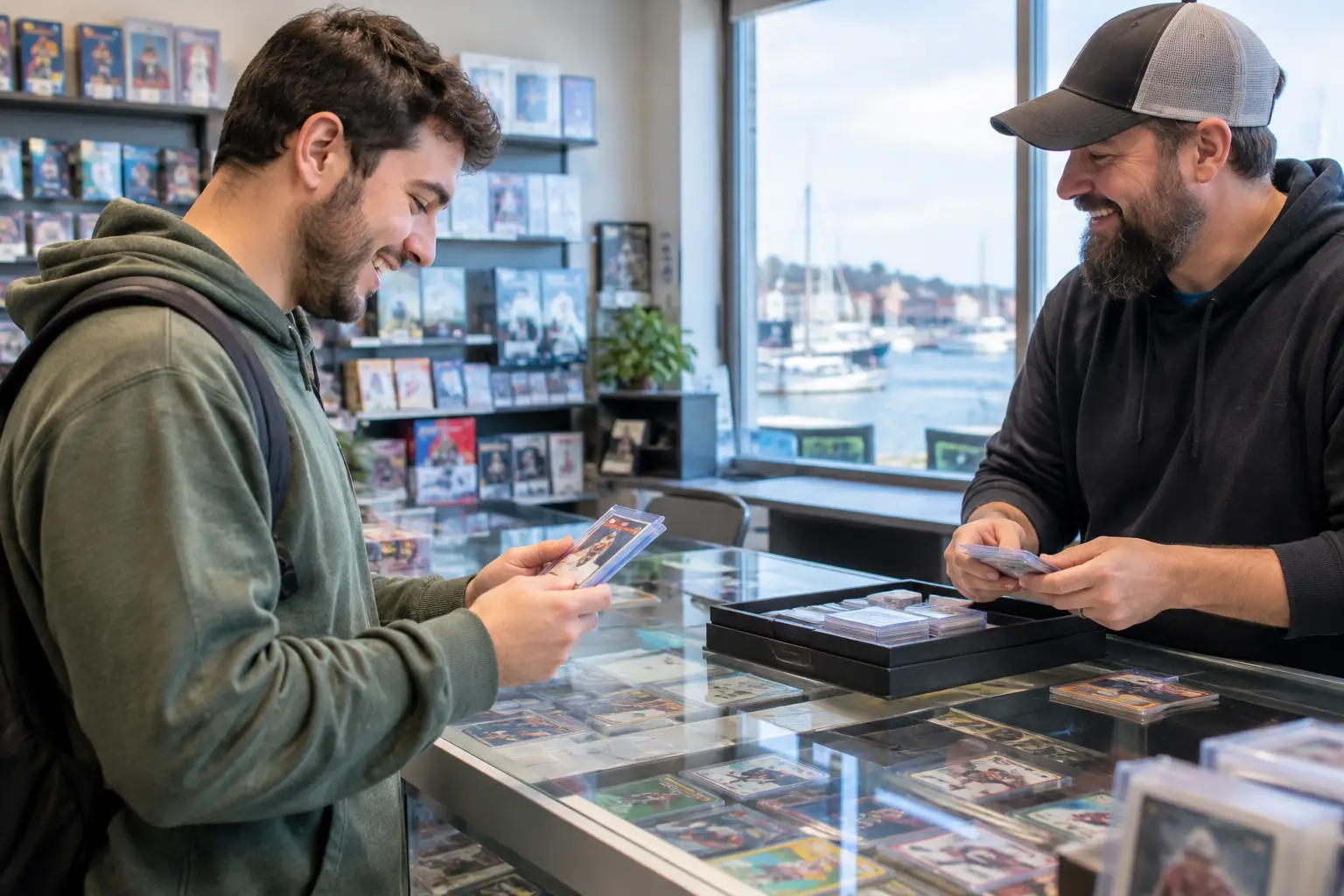
A great trade can turn a duplicate Pokémon ex, an extra One Piece leader, or a sports card outside your collecting lane into something you actually want to keep. When you trade cards locally, you get something an online listing cannot provide: the chance to inspect the card, talk through its value, and meet other people who understand why that one card matters to your binder or deck.
For collectors and players around New Bedford and the South Coast, local trading is one of the best parts of the hobby. It can also go sideways when condition, current prices, or expectations are unclear. A few simple habits make trades more enjoyable for everyone involved.
Why Trade Cards Locally?
Local card trading is about more than avoiding shipping costs. You can look at a card under good light, check the corners and surface, and make sure it is the exact version you expected. That matters with high-value singles, vintage Pokémon cards, rookies, alternate arts, serialized sports cards, and anything that could be affected by condition.
It is also faster. If you are building a deck for an upcoming event, trading for the last few cards you need can beat waiting for an order to arrive. If you are filling a Pokémon binder, another collector may have the reverse holo, promo, or illustration rare that has been missing from your page for months.
The social side is real, too. Local trades introduce you to collectors with different interests. A sports card collector might be happy to move Pokémon they pulled from a collection purchase. A One Piece player may have extra staples after changing decks. Those different collecting goals create opportunities that do not show up when everyone is trying to sell the same card online.
Know What You Are Trading Before You Meet
The cleanest trade starts before cards hit the counter. Pull out the cards you are willing to move and sort them into two groups: cards you would trade easily and cards that would need the right offer. That second group might include a favorite player, a chase pull, a card you had graded, or a key piece of your current deck.
Take a close look at condition. A card can look mint at first glance but have whitening on the back corners, a small surface scratch, edge wear, or a bend that changes its value. Be direct about flaws before the other person notices them. The same standard should apply when you inspect their cards. Honest condition conversations are not awkward - they are how both sides leave happy.
For sealed product, make sure the wrap, seals, and box condition are visible. Sealed items can be fun trade pieces, but they are harder to value than singles because demand changes with print runs, new releases, and collector interest. A slightly damaged box may still be perfectly fine for someone planning to open it, while a sealed collector may value it much less.
Check current market value, not old memories
Card values move. A card that was hot during release weekend may settle after more product enters the market. A previously overlooked card can jump when it becomes important in a competitive deck. Sports values can move with a call-up, injury, playoff run, or a player’s breakout season.
Before proposing a trade, look at recent market pricing for the exact card, set, rarity, and condition. Do not compare a regular version to a full art, a holo to a reverse holo, or a raw card to a graded copy. With sports cards, confirm the year, rookie designation, parallel, serial number, and autograph status.
Market price is a useful reference point, not a rule that removes all judgment. Someone may value a card more because it completes a set or fits their favorite character collection. That is fine as long as both people understand the difference between personal value and general market value.
How to Make a Fair Local Card Trade
Start with a simple question: “What are you looking for?” It gives the other collector room to explain whether they are after trade bait, playable cards, a favorite athlete, sealed product, or specific binder needs. A trade does not have to be perfectly equal on every price tracker if it helps both people reach their goals.
Still, fair does not mean vague. Put all cards involved on the table, agree on the approximate value of each, and point out condition differences. If one side is short by a few dollars, adding a smaller single, a pack, supplies, or cash can make the deal work. There is no need to force a trade just because you have both spent ten minutes discussing it.
Avoid pressuring newer collectors, especially kids, into moving a card they may regret trading later. If someone is unsure, encourage them to think about it, check a value, or bring a parent into the conversation. The hobby is better when a young collector leaves excited about their new card rather than feeling taken advantage of.
Keep offers respectful
A low opening offer may be part of negotiating, but there is a difference between negotiating and trying to catch someone off guard. If a card has a clear current value, do not pretend it is worth far less just because the other person is less experienced.
Likewise, do not take it personally when someone declines. They may be attached to the card, holding it for a different trade, or simply not interested in what you brought. A quick “no worries” keeps the door open for future trades.
What Makes a Card Shop a Better Place to Trade
A dedicated card shop gives local collectors a common place to meet, browse, and talk hobby without guessing whether the other person is serious. You are surrounded by people who recognize the difference between a binder card, a deck staple, and a collectible worth protecting in a top loader.
A shop environment also makes it easier to ask for a second opinion if a card’s condition or value is difficult to judge. That does not mean every trade needs an official referee. It means you have access to hobby knowledge when there is a question about print quality, authenticity, set identification, or recent demand.
Waterfront Card Shop serves as a local destination for collectors and players who want to buy, sell, trade, and enjoy Pokémon, One Piece, sports cards, and hobby supplies in New Bedford. Bringing your cards organized in a binder, card case, or labeled storage box makes it easier for other collectors to see what you have without handling loose cards unnecessarily.
Protect Your Cards During a Trade
Condition protects value, but it also protects the enjoyment of the hobby. Keep higher-value singles in sleeves and top loaders or semi-rigid holders. Do not place drinks near the trade area, and avoid sliding cards across a rough counter. If you are showing a binder, let the other person know whether cards can be removed from pages.
For graded cards, check the slab for cracks, label details, and any issues that could affect display or resale appeal. For raw cards that may eventually be graded, look beyond the front image. Centering, corners, edges, and surface all matter, and no one should promise a particular grade.
Authenticity deserves attention as well. Most local hobby trades are made in good faith, but counterfeit cards exist, particularly for popular, expensive singles. Be cautious with deals that seem dramatically too good to be true. Compare fonts, texture, coloring, holo patterns, card stock, and known details for the set. If you are uncertain, pause the trade rather than rushing through it.
Build Better Trades Over Time
The best local traders are not necessarily the people with the biggest binders. They are the people who are prepared, honest, and easy to deal with. Bring cards that other collectors can actually browse, know roughly what you want, and be willing to pass when a trade is not right.
Keep a small trade binder for duplicates and cards outside your main collection. Update it occasionally so you are not offering cards you already sold or traded. If you are a player, separate your deck cards from your trade cards. Nothing creates confusion faster than realizing a traded copy was the last one needed for Friday’s deck list.
A good trade should leave both people with a story worth sharing: the missing card found, the deck finally finished, the rookie added to a personal collection, or the pull that became someone else’s chase. Bring your extras, know your cards, and give the next great trade room to happen.