
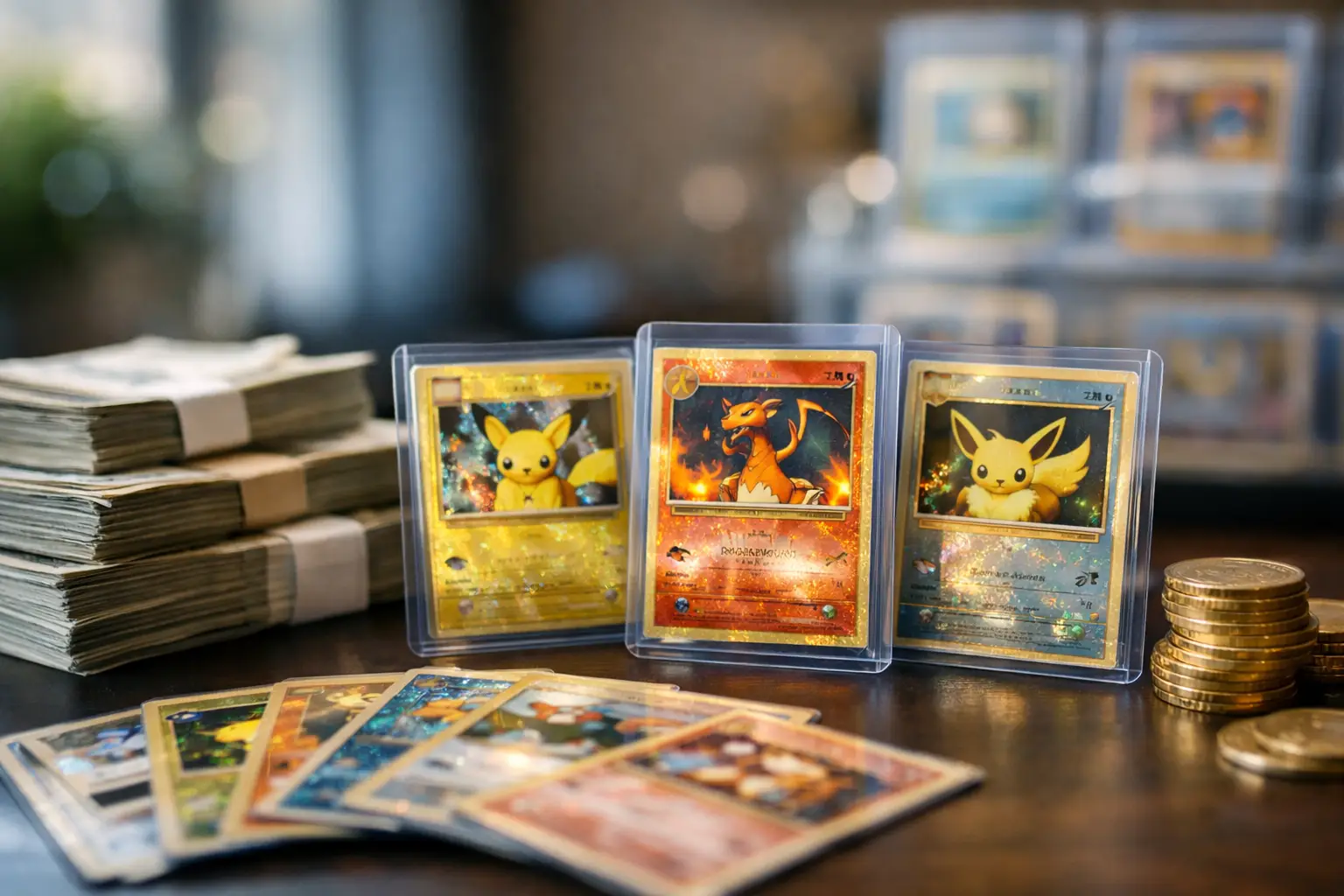
A shiny card in an old binder can be exciting, but shine alone does not make it valuable. The real answer to what Pokemon trading cards are worth money comes down to a few connected details: the exact card, its printing, its condition, how many collectors want it, and what comparable copies have actually sold for.
That means a childhood collection may contain a card worth a few dollars, a card worth a few hundred, or a card that is more valuable as a memory than a sale. Learning how to tell the difference keeps you from overlooking a great card or expecting a big payday from every holographic pull.
What Pokemon Trading Cards Are Worth Money?
The cards that command the strongest prices usually combine scarcity with demand. A rare card from an older set is a good starting point, but age is not automatic value. Plenty of vintage cards were printed heavily, played without sleeves, or have limited collector demand. On the other hand, a newer card can be valuable immediately if it is a difficult pull and features a popular Pokémon or trainer.
First-edition Base Set cards, especially Charizard, Blastoise, and Venusaur, remain iconic. Shadowless Base Set cards also draw attention because they were printed before the standard unlimited version. Other vintage standouts include Neo-era Lugia, Crystal Pokémon, Gold Stars, early EX cards, and certain promotional cards distributed through events, tournaments, magazines, or Pokémon Center releases.
Modern value often lives in alternate art cards, Special Illustration Rares, hyper rares, high-demand full arts, and tournament-promos. A card does not have to be old to be a chase card. The market follows art, character popularity, pull rates, competitive play, and the energy around a set release.
Start With the Exact Card, Not the Character
“Charizard” is not enough to identify a card. Pokémon has printed many versions of the same character, often with dramatically different values. Look closely at the card name, set symbol or set code, card number, rarity mark, language, and any first-edition or promotional stamp.
The card number near the bottom is especially useful. A card numbered 199/165 is a secret rare because it falls above the set’s standard number. That does not guarantee a high price, but it tells you the card has a special rarity tier. A black star generally indicates rare, while modern rarity systems may use double black stars, gold stars, illustration markers, or other symbols depending on the era.
Also check for reverse holo versus holo versions. In older sets, the standard holo and reverse holo can have very different demand. In newer sets, a regular rare, a promo version, and a full-art version of the same Pokémon can look similar at a glance while having very different market values.
Vintage cards collectors watch closely
Vintage does not mean only Base Set. Cards from the late 1990s and early 2000s can carry serious collector interest, especially when they are clean and properly identified. Look out for first-edition stamps, shadowless printing, e-Reader cards, Aquapolis and Skyridge holos, Legendary Collection reverse holos, Neo Destiny shinings, and EX-era cards.
Condition is often the deciding factor with these cards. A played vintage holo may still be desirable, particularly if it is a major character, but a near-mint copy can sell for multiples of the price. The gap becomes even wider when a card has a top grade from a respected grading company.
Modern cards that can hold real value
Modern collecting moves faster, but it is not just hype. The strongest modern cards usually have an art treatment people genuinely want in a binder or display case. Alt arts, special illustration rares, sought-after trainer cards, and rare promos can remain desirable after a set leaves shelves.
Still, modern cards are generally printed in greater numbers than vintage cards. A hot card can fall in price as more copies are opened, graded, and listed. If you pull a major chase card, check recent sales rather than relying on launch-week asking prices.
Condition Can Change the Price Completely
Collectors use condition language carefully because one tiny flaw can matter. Near mint does not mean “looks good from arm’s length.” It means the card has minimal visible wear under close inspection. Centering, corners, edges, surface scratches, print lines, dents, creases, and whitening all affect value.
A crease is one of the biggest value killers, even on an otherwise attractive vintage card. Surface dents and pressure marks can be just as serious because grading companies notice them. A card can look perfect in a binder sleeve yet receive a disappointing grade after closer review.
Before you price a card, remove it from its binder carefully and inspect it in good light. Check the front and back at different angles. Do not use household tape, glue, cleaning fluids, or aggressive wiping to “improve” it. Attempts to fix a card can cause more damage and create problems for collectors or graders.
For cards you believe may be valuable, use a penny sleeve and a rigid top loader or semi-rigid holder. Store them somewhere dry, out of direct sunlight, and away from heat. Protection is not exciting, but it preserves the value you already have.
How to Check What Your Cards Are Actually Selling For
The most useful price is not the highest listing you can find. It is the recent sold price for the same card in a comparable condition. A seller can ask any number they want. That does not mean buyers are paying it.
Match the exact version first. Then compare raw cards to raw cards and graded cards to graded cards. A graded 10 should not be used to price a lightly played ungraded copy. Likewise, do not compare an English card with a Japanese version unless you understand the demand for both releases.
Pay attention to the sale date. Fast-moving modern cards may shift noticeably over a few weeks. Vintage cards tend to be steadier, but prices can still rise when a character returns to the spotlight, an anniversary sparks nostalgia, or high-grade supply becomes tighter.
If you are bringing cards to trade or sell, sort them before you go. Keep higher-end cards separate from bulk, and do not assume every holo belongs in the high-value pile. Bulk can still have trade value, especially for kids, deck builders, and collectors filling out sets, but it is priced differently from singles with established demand.
Grading Helps Some Cards, Not Every Card
Grading can add trust and value, particularly for vintage cards, major chase cards, and copies that appear exceptionally clean. It gives buyers a standardized opinion on condition and protects the card in a sealed holder. But grading costs money, takes time, and does not automatically turn a card into a profit.
A card with off-center borders, whitening, scratches, or a hidden dent may grade lower than expected. If the likely graded value is only slightly above the raw value plus fees, grading may not make sense. It is usually better reserved for cards where condition has a meaningful premium.
For many collectors, a clean raw copy is the right choice. It is easier to enjoy in a binder, easier to trade, and often more affordable than a graded example.
Watch for Reprints, Fakes, and Misleading Signals
A reprint can affect prices, especially for modern cards and sealed products. That does not make a card worthless, but more supply can cool a hot market. Set announcements and restocks are worth keeping in mind before buying solely because a card has risen quickly.
Authenticity matters just as much. Fake Pokémon cards may have unusual fonts, incorrect colors, poor foil patterns, missing texture on textured cards, or suspiciously glossy stock. Do not bend, tear, or perform destructive “tests” on a card you are unsure about. Compare it with a known authentic card from the same era, and ask a knowledgeable hobby shop for a second look.
Be cautious with claims like “error card” or “misprint.” True errors can be collectible, but many supposed errors are just damage, poor centering, or normal print variation. A real error needs collector demand, not just an odd-looking detail.
Build Value Around What You Enjoy
The best card to keep is not always the most expensive one. Some collectors chase vintage holos, others want a complete modern set, and plenty of players care more about a deck’s usefulness than a slab label. Value is financial, but the hobby is also about the cards you are excited to pull, trade, and show off.
If you have a binder you are unsure about, bring it to Waterfront Card Shop in New Bedford with your questions and a little patience. Separate the cards that look promising, protect the ones you want to keep, and let the collection tell you what it is before you decide what to do with it.