
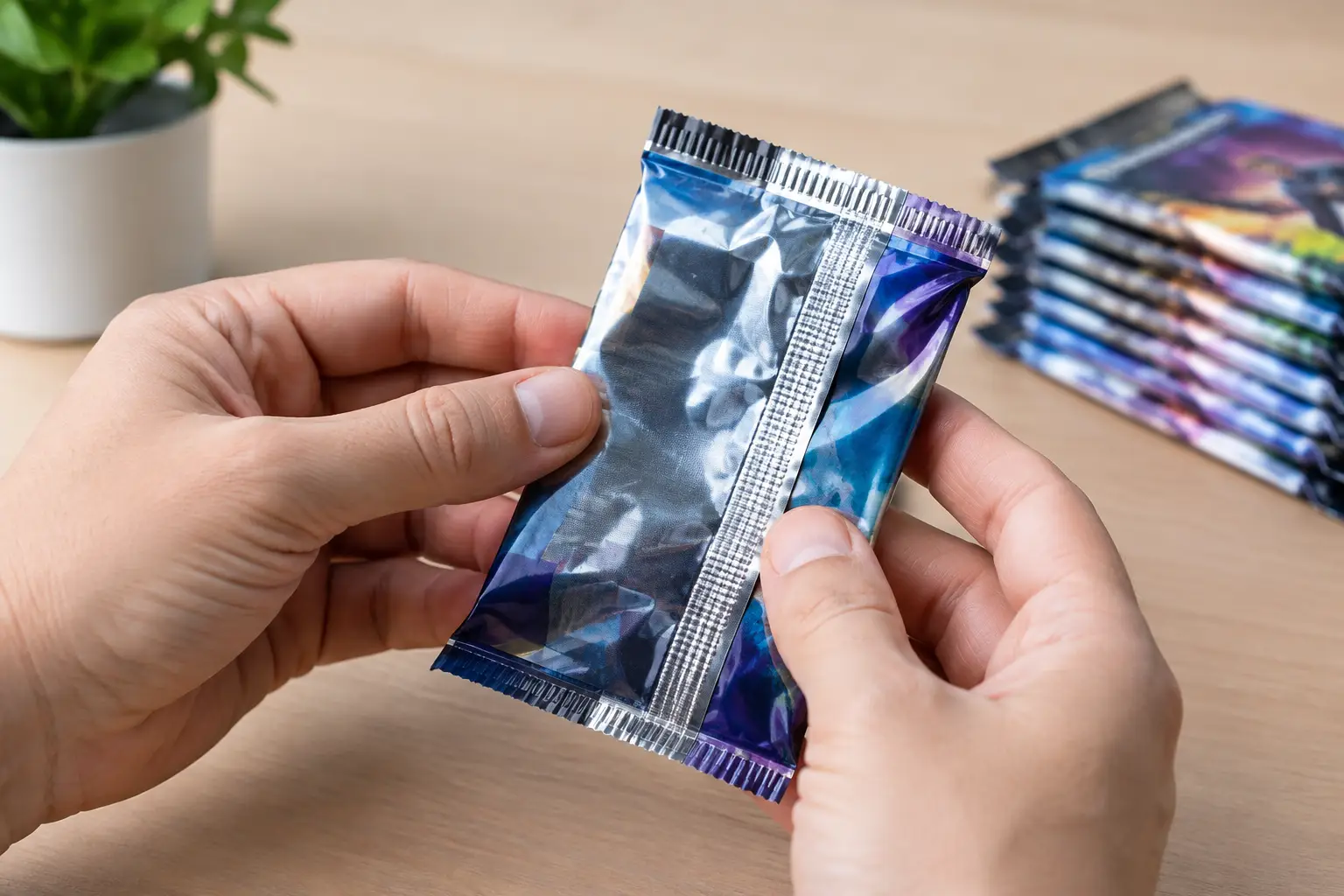
A booster pack should feel like a small moment of possibility, whether you are chasing a Pokémon illustration rare, building a One Piece deck, or ripping sports cards with your kid. Learning how to spot resealed booster packs protects that moment. A pack that has been opened, searched, and closed again can look convincing at a glance, so the goal is not to panic over every tiny flaw. It is to know what normal factory packaging looks like and when to pause before buying.
Start With the Package, Not the Pulls
The first rule is simple: inspect sealed product before opening it. Once a pack is torn, it is much harder to prove what happened. Look at several packs from the same product if possible. Factory wrapping can vary, especially between print runs and regions, but packs from the same box should generally have consistent crimping, material, color, and overall shape.
A resealed pack often has one or more signs that do not match the rest: unusually loose plastic, uneven seals, a strange wrinkle near an edge, or a pack that feels flatter than expected. One odd detail is not automatic proof. Manufacturing quality is not always perfect. Several mismatched details together are a much stronger reason to walk away.
Check the Top and Bottom Crimps
The crimped edges are usually the first place collectors look. On a factory-sealed pack, the top and bottom crimps should appear pressed evenly into the wrapper. The pattern will vary by brand and product, but it should look like a clean machine seal rather than something that has been reheated or pressed by hand.
Watch for crimps that are unusually flat, overly wide, wavy, or melted-looking. A resealed edge may also have plastic that looks shiny, stretched, or fused beyond the normal crimp line. If the wrapper has a noticeably different texture around one end, that deserves attention.
Do not confuse a slightly off-center crimp with a reseal. Packs can leave the factory with minor cosmetic flaws. What matters is whether the seal looks structurally different from comparable packs, especially if the plastic appears cut, softened, or glued back together.
Look for Excess Plastic and Uneven Tension
A normal pack usually has a fairly consistent amount of wrapper material around the cards. If one end has a long flap of loose plastic, or if the wrapper is tight in one spot and baggy in another, inspect it closely. Resealing can leave extra material or tension marks that were not present originally.
Turn the pack under a light. Excess adhesive, cloudy areas, or a seam that catches the light differently from the rest of the wrapper can indicate that it was altered. Again, compare it to another pack from the same set whenever you can. Comparison is more useful than relying on a single photo or memory.
Feel the Pack Carefully
You do not need to squeeze a pack aggressively to inspect it. In fact, avoid pressing hard enough to damage cards inside. Instead, hold it lightly and pay attention to its shape.
A pack that feels unusually thin, hollow, or loose may be missing cards or have been opened and repacked. The cards inside should normally sit together in a neat stack. If the pack has a strange air pocket, a pronounced fold, or an uneven lump, it is worth asking why.
Weight can be a clue, but it is not a verdict. Different card stocks, code cards, inserts, foils, and production runs all affect pack weight. Modern Pokémon and other TCG products are especially unreliable for weight-based judgments. Do not buy a loose pack because someone calls it “heavy,” and do not assume a light pack is resealed. Packaging inspection and seller trust matter far more.
Inspect Artwork, Printing, and Wrapper Quality
Counterfeit and altered packs can have wrapper issues beyond the seal itself. Check that the artwork is sharp, the colors look right, and the product name, logos, and legal text are readable. Blurry printing, incorrect fonts, washed-out colors, or odd spacing are warning signs.
Pay close attention to the back of the pack. Barcode placement, set information, trademark text, and material texture should match known authentic examples for that release. Some legitimate products have regional variations, so do not reject a pack solely because the wrapper differs from a photo online. But a cluster of differences is a problem.
If you are buying a vintage pack, the standard changes a little. Older wrappers may show age, storage wear, or minor fading. That does not make them resealed. Vintage purchases are simply higher stakes, which makes a reputable seller, clear photos, and a return policy even more valuable.
Loose Packs Carry More Risk Than Sealed Boxes
A loose booster is not automatically bad. Plenty of collectors split boxes with friends, buy packs for a quick rip, or trade extras at a local card shop. Still, a loose pack has less protection than a sealed booster box, collection box, tin, or sleeved blister.
With modern products, sleeved boosters and sealed blisters add another layer of packaging that is harder to alter without leaving obvious evidence. A sealed booster box gives you the best chance to inspect factory shrink, box seals, and overall condition before opening. It does not eliminate risk, but it reduces the opportunities for someone to tamper with individual packs.
For products with known pull-rate patterns, loose packs can also be a tougher buy even when they are not resealed. Someone may open a box until they hit a major pull, then sell the remaining packs. That is different from resealing, but it can still affect the experience you expect from the purchase. Ask whether packs came from a fresh box and whether the seller opened the box personally.
Know the Seller Before You Know the Deal
The best visual inspection in the world cannot replace buying from someone accountable for what they sell. A deal that seems far below market price deserves extra scrutiny, particularly for popular Pokémon sets, One Piece releases, vintage packs, and high-demand sports products.
Before buying, consider where the pack came from, whether the seller can explain its source, and whether they stand behind the product. A trusted hobby shop has a reputation to protect and can often answer basic release and packaging questions without making you feel like a bother. At Waterfront Card Shop, the goal is for collectors and parents alike to feel comfortable asking to look at sealed product before they buy.
Online marketplace listings require a little more patience. Request clear photos of the front, back, top, and bottom of the exact pack you will receive. Be cautious with stock images, vague descriptions, and sellers who refuse reasonable questions. Feedback is useful, but it is not a substitute for a clear product listing and buyer protection.
What to Do If You Suspect a Reseal
If you have not purchased the pack, do not let fear of missing out make the decision for you. Set it aside and compare it with a known authentic pack. Ask the seller directly about the packaging and source. A legitimate seller should be able to have a normal conversation about it.
If you already bought it, keep the wrapper, receipt, order details, and any photos you took before opening. Do not throw away the pack immediately, even if the contents look suspicious. Documentation gives you the best chance of resolving the issue with the seller or payment platform.
Avoid publicly accusing someone based on one weak clue. Factory defects happen, and card distribution can be unpredictable. But if the wrapper shows clear tampering, cards are missing, or the contents are obviously inconsistent with the product, document what you found and contact the seller promptly.
A Better Way to Buy Packs
The safest purchase is not necessarily the most expensive one. It is the one where the product, condition, and source make sense together. For a quick pack-opening experience, a sleeved booster or sealed blister can be a smart choice. For a bigger opening session, a sealed box from a trusted source provides more confidence than a stack of mystery loose packs.
Collecting should still feel fun. Take a minute to inspect the crimp, wrapper tension, printing, and source before you hand over your money. That small habit lets you spend less time worrying about reseals and more time enjoying the cards you came to find.