
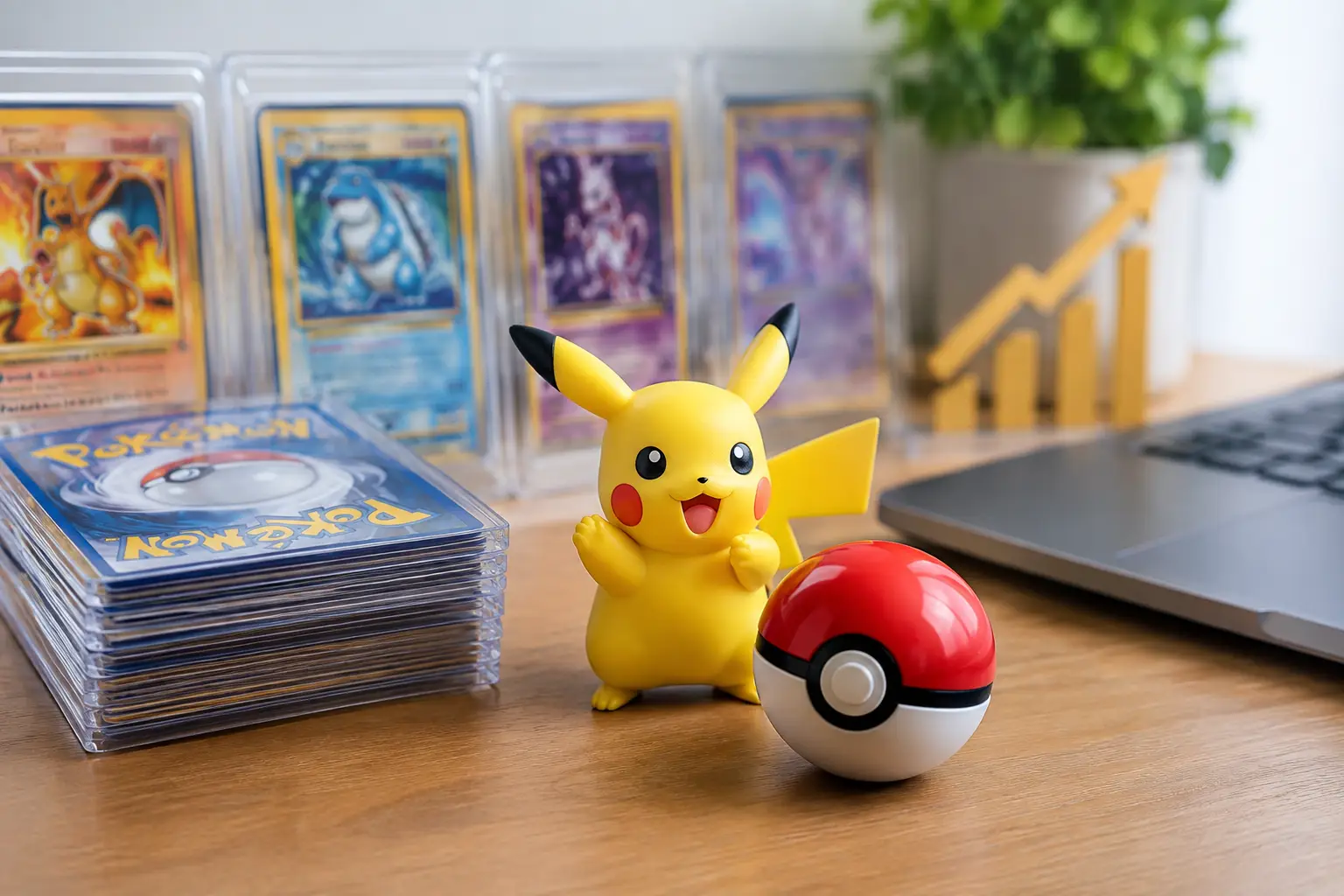
The Pokemon market forecast for 2026 is less about finding one guaranteed winner and more about understanding why certain cards, sets, and sealed products keep earning collector attention. Pokémon remains one of the deepest markets in the hobby, with new players entering through current releases while longtime fans chase childhood favorites, premium promos, and high-grade vintage cards. That mix gives the market staying power, but it also means not every product moves the same way.
For collectors in New Bedford and across the South Coast, the useful question is not simply, “What will go up?” It is, “What do I enjoy collecting, what is actually scarce, and what can I buy at a price that makes sense?” A good collection can include a binder page you love, a playable deck, a sealed box for a future opening, and a carefully chosen graded card. Each serves a different purpose.
Pokemon Market Forecast: What Could Shape 2026
The biggest force behind the Pokémon market is still demand from several kinds of buyers at once. Kids want packs and characters they recognize. Players need legal cards for decks. Set collectors want to finish binders. Adult collectors look for nostalgia, artwork, condition, and scarcity. When all of those groups want the same product, prices can get competitive quickly.
The market will likely continue separating cards with lasting collector appeal from cards that are mainly fueled by release-week excitement. A popular Pokémon, a standout illustration rare, a meaningful promo, or a card with proven demand across multiple generations has more support than a random high-rarity pull. That does not mean every Charizard or Pikachu is automatically a home run. Print volume, card condition, grading population, and the entry price still matter.
Current-era products should remain active, especially sets with memorable art and recognizable chase cards. But modern supply is usually much larger than collectors first assume. A card can be difficult to pull and still have thousands of clean copies available over time. Early prices often reflect excitement and low supply immediately after release. As more packs are opened, many singles settle.
That is why patience can be an advantage for collectors who are buying singles rather than chasing hits from packs. Opening packs is fun, and it is part of what makes the hobby great. It is just not always the most efficient way to acquire a specific card for a binder or collection.
Sealed Product Should Stay Selective
Sealed Pokémon product has a special place because it holds the experience of opening packs, not just the cards inside. Booster boxes, Elite Trainer Boxes, collection boxes, tins, and special-set products can all appeal to collectors. Still, “sealed” is not one category with one outcome.
Booster boxes often have the clearest collector format because they offer a consistent opening experience and fit neatly into long-term collections. Special sets can also attract strong interest when they feature a major anniversary, favorite Pokémon, or a compelling card list. On the other hand, bulky boxes with large promo cards and lots of packaging can be harder to store and may have less consistent demand later.
Reprints are the trade-off every sealed buyer should respect. A product that feels scarce in one month can become easier to find after another wave reaches stores. Reprints are good for players, parents, and anyone who wants a fair chance to enjoy a set. They can also cool off short-term prices. That is not a sign that the set has failed. It is a reminder to avoid treating release-day scarcity as permanent.
For 2026, collectors may do best by choosing sealed products they would be happy to keep even if prices stayed flat. Buy the set with artwork you like, the expansion you would enjoy opening with friends, or the box that fits a focused Pokémon collection. That approach removes a lot of pressure from the purchase.
What to watch before buying sealed
Check the set’s chase cards, how much product is still being printed, and whether the format is easy to store. Also consider the condition of the seal and box. Crushed corners, tears in shrink wrap, loose wrapping, and water damage can matter to collectors, particularly on older product. Authenticity matters just as much. A trusted card shop gives buyers a better starting point than an unfamiliar listing with photos that do not show enough detail.
Singles May Offer the Best Value for Focused Collectors
Singles are likely to remain the most practical lane for collectors with a clear target. Instead of spending through multiple packs hunting one illustration rare, you can put that budget directly toward the card. This is especially helpful for parents helping a child complete a binder, players building a deck, and collectors looking for one favorite Pokémon in near-mint condition.
Expect top chase cards to stay volatile around a set’s release. Prices can jump after an early pull is posted online, then decline as more product is opened. Sometimes a card rebounds when a set goes out of print or when collectors decide it has become an artwork people genuinely want. Sometimes it does not. The difference usually comes down to long-term desirability, not just rarity symbols.
Playable cards add another layer. A competitive card can rise because it becomes important in a winning deck, then drop after rotation, a reprint, or a metagame shift. Players should treat those cards as game pieces first. If you need four copies for a deck, the value is in getting to play. If you are collecting, it can be smarter to wait until tournament demand cools.
Condition is where knowledgeable buying pays off. Near mint, lightly played, and damaged are not interchangeable descriptions. Centering, whitening, surface scratches, dents, and bends all affect what a card is worth and whether it is a realistic grading candidate. Ask to see the card clearly before purchasing, especially for higher-value vintage and modern chase cards.
Vintage and Graded Cards Need a Slower Approach
Vintage Pokémon has an advantage that modern cards cannot copy: genuine age, lower surviving supply in clean condition, and a direct connection to the era many adult collectors remember. First-generation favorites, early holographics, iconic promos, and cards from beloved older sets should continue to draw attention.
But vintage is not automatically safe just because it is old. Some cards are plentiful in played condition, and a high price tag does not guarantee high demand. Graded cards add another complication. The label, grade, grader, eye appeal, and number of comparable copies all matter. A PSA 10 population can grow. A PSA 8 with excellent centering may appeal more to one buyer than a stronger numerical grade with visible flaws.
If you are starting a vintage collection, set a condition standard before you shop. Maybe you want clean binder copies. Maybe you want one graded centerpiece. Maybe you want only cards from the year you started playing. A defined goal keeps the search fun and helps prevent impulse buys that do not fit your collection later.
A Practical Buying Plan for 2026
Collectors do not need to predict every market movement. They need a plan that leaves room for enjoyment. Start with a monthly hobby budget, then split it between opening product, buying singles, and saving for bigger targets. The right split depends on your goals. A player may spend more on deck upgrades, while a vintage collector may save for one card instead of buying several smaller items.
Keep a short want list on your phone or in a notebook. Include the card name, preferred condition, and the price range you feel good about paying. This makes a card show, trade night, or trip to the local shop more productive. You will know when you have found a real fit instead of buying something only because it is suddenly popular.
It also helps to track releases without feeling obligated to buy every one. Pokémon puts out enough product that skipping a set is completely normal. Missing one release can make room for a better purchase later, whether that is a favorite single, a sealed box from a set you truly enjoyed, or supplies to protect the cards you already own.
Waterfront Card Shop can help collectors compare options in person, from a first pack for a new fan to a specific single for a growing binder. The best part of a local card shop is the conversation: you can ask about condition, learn what a set is known for, and make a choice that fits your budget.
The 2026 market will have hot releases, surprise cards, reprints, and price swings just like every other year. Build around the Pokémon, artwork, formats, and memories that matter to you, protect your cards well, and leave enough room in the budget for the next great find.