
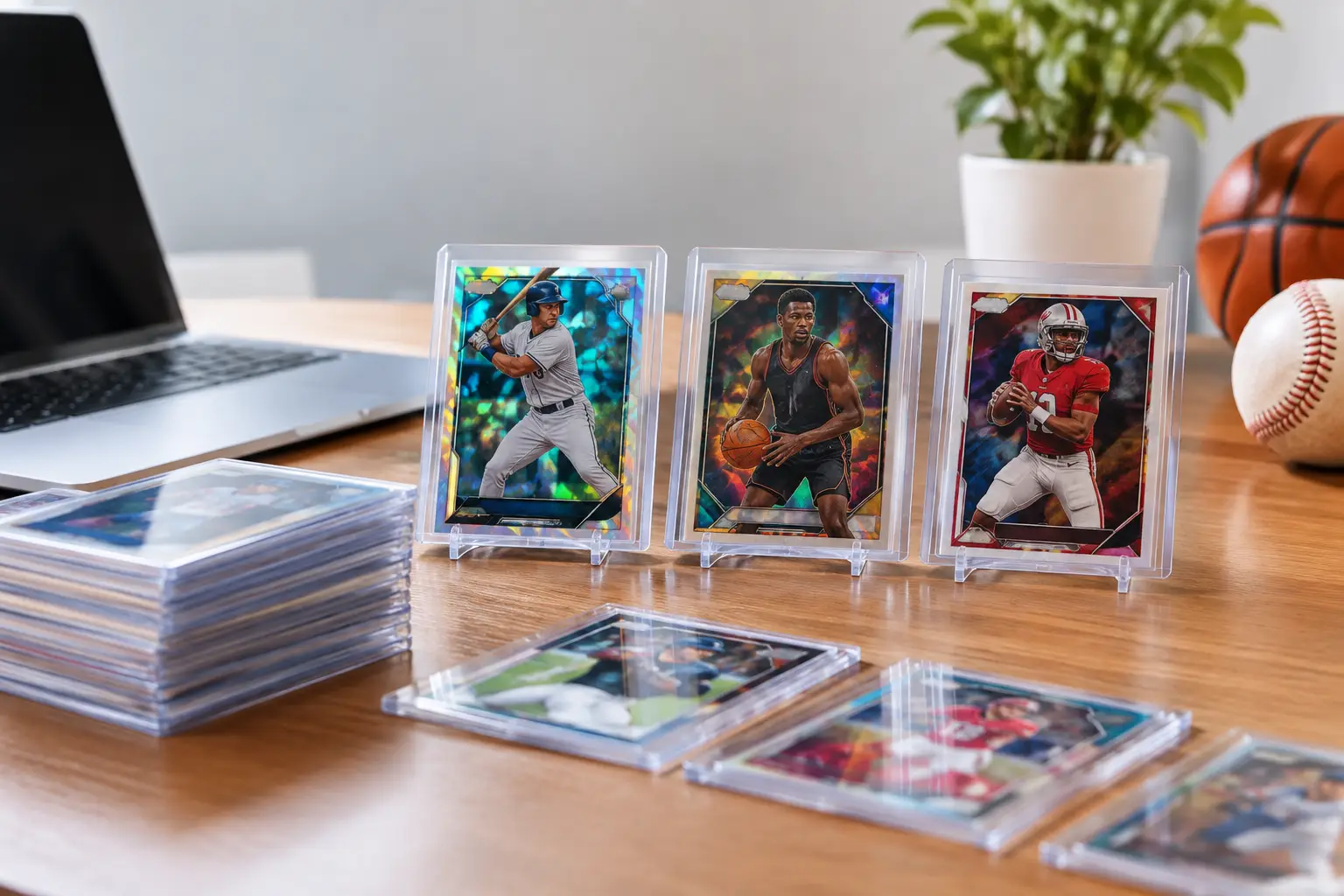
A hyped rookie can sell out in hours, then cool off before the next season ends. That gap between excitement and lasting demand is the real story behind sports card collecting trends 2026. Collectors are still chasing big pulls and breakout stars, but more of them are asking better questions before they buy: Is this card scarce? Is the player actually building a legacy? Is the condition strong enough to matter?
The hobby has not become less fun. It has become more selective. For collectors in New Bedford and across the South Coast, that means the best purchases are not always the loudest ones. They are the cards, sets, and sealed products that match a clear collecting goal.
Sports Card Collecting Trends 2026: Smarter, Not Slower
Sports cards remain an excitement-driven category. A huge game, a call-up, a trade, or a playoff run can move prices quickly. What has changed is how experienced collectors respond. Fewer buyers are treating every hot card as a must-have, and more are separating short-term momentum from cards they want to own for years.
That distinction matters most with modern rookies. A first-year card can be a great pickup, especially when a player has real talent, playing time, and a strong fan base. But the market now has far more parallels, inserts, autograph versions, serial-numbered cards, and release formats than it did in earlier eras. “Rookie card” alone does not tell the whole story.
Collectors are paying closer attention to the specific card: its print run, its design, whether it is licensed, how often it appears for sale, and where it sits in a product’s hierarchy. A numbered rookie autograph may have a different long-term audience than a base rookie from a widely opened release. Neither choice is automatically right or wrong. It depends on whether you are building a player collection, chasing a premium card, trading actively, or buying with resale in mind.
Vintage Is Winning New Respect
Modern cards supply the chase. Vintage cards supply the history.
In 2026, vintage continues to appeal because it offers something modern product cannot manufacture: a finite supply shaped by decades of handling, collecting, and loss. Hall of Famers, iconic sets, regional favorites, and well-centered examples of familiar cards all have a strong place in a balanced collection.
The key is that vintage does not need to mean only the most expensive names. Mid-grade stars, classic team cards, and affordable cards from recognizable sets can be satisfying entry points. A collector does not need a museum-level budget to enjoy the visual impact and story behind older cardboard.
Condition is the trade-off. Vintage collectors should expect wear, print defects, off-centering, soft corners, and surface issues. Those flaws are part of the category, but they should be reflected in the price. A card with honest wear can be a great binder piece. A high-grade example is a different purchase entirely, usually with a much smaller supply and a much higher price tag.
Grading Has Become More Selective
Graded cards still matter, particularly for vintage, major rookies, and higher-end autos or serial-numbered cards. But grading is no longer a shortcut to value. A slab does not erase weak eye appeal, and the cost of submitting a card has to make sense for the card itself.
Collectors are looking beyond the number on the label. Centering, surface quality, corner sharpness, color, and the overall presentation matter. Two cards with the same grade can look very different in person. For raw cards, clear inspection matters even more. Check for scratches, dimples, chipping, edge wear, print lines, and anything that may affect how the card displays or grades.
A practical rule: grade cards because you want protection, authentication, easier resale, or a place in your personal collection. Do not grade every card that looks clean. Lower-value cards can be better enjoyed raw in a binder, top loader, or one-touch case. That leaves more room in the budget for cards you truly care about.
The Return of the Personal Collection
One of the healthiest trends in the hobby is the growth of the personal collection, often called a PC. Instead of trying to own whatever the market is talking about, collectors are building around a player, team, set, era, design, or hometown connection.
A PC gives a collection direction. Maybe it is every card of a favorite Red Sox player, a run of classic basketball inserts, numbered Patriots cards, or one rookie card from each player on a favorite team. These collections are easier to grow over time because the target is clear. They also make trading more enjoyable, since you know what fits and what does not.
For younger collectors and parents, this approach is especially useful. Set a budget, choose a favorite player or team, and make the binder part of the fun. It teaches card condition, organization, patience, and the difference between a card that is personally meaningful and one that is simply expensive.
Sealed Product Still Has a Place - With Expectations
Opening packs is one of the best parts of collecting. The possibility of pulling a big rookie, autograph, memorabilia card, or low-numbered parallel is what keeps new releases exciting. Sealed hobby boxes, blasters, mega boxes, and packs all offer different price points and odds, but none should be treated as a guaranteed return.
The trade-off is simple: ripping provides the experience and the chance at a major hit; buying singles gives you control. If your goal is one specific card, buying that card is usually more direct than chasing it through boxes. If your goal is opening day with friends, building a set, or enjoying a new release, sealed product delivers a different kind of value.
Collectors who do both tend to have the most balanced approach. Open what feels fun and fits the budget, then use singles to fill the gaps. That approach also helps avoid the frustration of turning every box break into a financial scorecard.
Community and Trust Matter More Than Ever
The sports card market moves fast online, but collecting is still better when you can ask questions, inspect cards, and talk shop with people who understand the product. Local card shops, trade nights, card shows, and community events give collectors a chance to learn without relying on a listing photo or a social-media price claim.
Authenticity and condition are central to that trust. Counterfeits, altered cards, trimmed edges, fake autographs, and misleading listings are real risks, especially with high-demand vintage cards and modern chase cards. Buy from sources that can speak clearly about what they are selling. When a deal seems far below the market, slow down and inspect why.
Waterfront Card Shop is built around that local-shop advantage: a place where collectors can look at cards, talk through products, and stay connected to the hobby beyond a checkout screen.
How to Collect Well in 2026
The strongest collections usually come from a simple plan. First, decide what you want the collection to do for you. Are you collecting for the player, the team, the thrill of ripping, the history, the investment potential, or a mix of all five? Your answer should shape where your money goes.
Then make room for patience. Track recent sale prices, compare comparable cards, and do not let one huge game force a rushed purchase. A player can have a breakout night without becoming a long-term hobby cornerstone. On the other hand, a quiet offseason can create opportunities to buy cards you already wanted at a more reasonable price.
Protect what you buy. Penny sleeves and top loaders work well for most cards. Keep cards away from moisture, direct sunlight, food, and rough handling. For higher-end pieces, use secure storage and keep a record of what you own. Good care is not glamorous, but it protects both the card and the enjoyment you get from it.
The best collection in 2026 will not look exactly like anyone else’s. Chase the cards that make you stop at the display case, remember a game, or want to show someone your binder. The market will keep moving. A collection built with purpose gives you a reason to enjoy the hobby through all of it.