
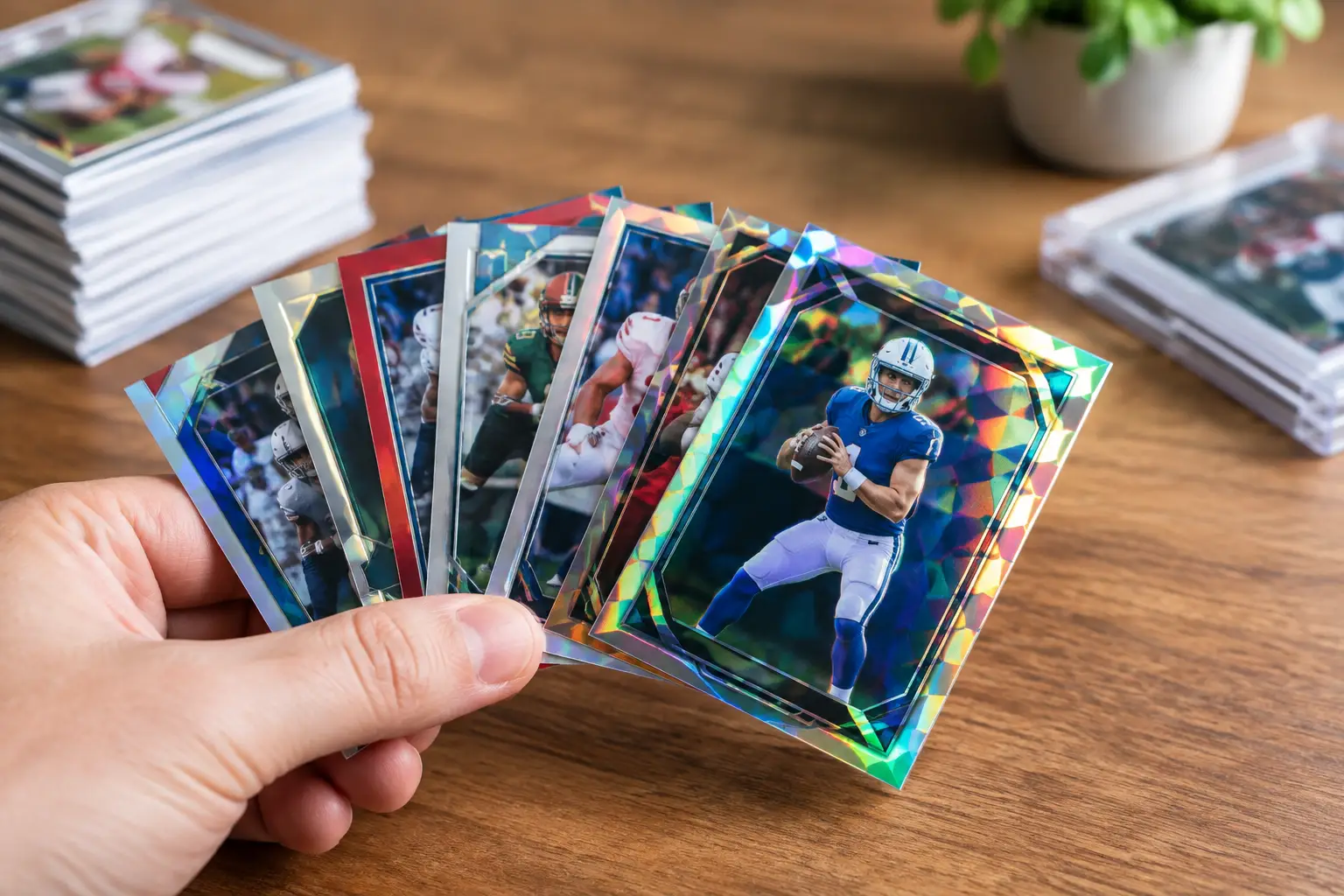
A pack can hold two cards of the same player from the same set, yet one might be a common base card and the other could be a numbered parallel worth keeping in a top loader. This sports card parallels guide breaks down what separates them, how to read the details on the card, and how to decide what makes sense for your collection.
What Are Sports Card Parallels?
A parallel is an alternate version of a base card. It usually uses the same player photo, card number, and basic design as the standard card, but changes a visual feature such as the border color, foil finish, background pattern, or card stock. Parallels are a major part of modern sports card collecting because they give collectors more versions of favorite players to chase.
For example, a set may have a standard base rookie card, plus Silver, Red, Blue, Gold, Green, and Black versions. Some are easier to pull than others. Some are serial numbered. A few may only be found in certain box formats, such as hobby boxes, blasters, retail packs, or online-exclusive releases.
The key point: a shiny card is not automatically a rare card, and a rare card is not automatically valuable. The player, set, condition, demand, autograph or memorabilia content, and print run all matter.
How to Tell Which Parallel You Have
Start with the front of the card. Most parallels are designed to stand apart from the base version through color, refractor-like shine, patterned foil, or a different border. Compare it to a checklist image or another known base card from the same release when possible.
Then turn the card over. Manufacturers often name the parallel in the fine print on the back, though not every product does. A serial number is another clear clue. If you see something like 17/99, the card is number 17 from a stated run of 99 copies.
Do not confuse the card number with a serial number. A number such as #142 identifies where that card belongs in the set. A stamped number like 017/199 identifies a limited copy. Both can be useful, but they mean very different things.
The Most Common Parallel Types
Unnumbered color parallels use a different color or finish but do not state how many exist. These can still be collectible, especially for rookies, stars, and popular team collectors. Their scarcity varies widely by product and format.
Numbered parallels have a stated print run, such as /299, /99, /49, /25, /10, /5, or 1/1. In general, the smaller the number, the fewer copies were made. A /10 card is scarcer than a /99 version of the same player and design.
Refractor, Prizm, chrome, and holo-style parallels use reflective surfaces and often have additional color variations. These are among the most recognizable modern sports card formats, but each brand names its technology differently.
Patterned parallels may use waves, checkerboards, cracked ice, disco circles, camo, shimmer, or other background patterns. These can be especially popular because they are easy to recognize in a binder, display case, or online listing.
One-of-one cards are marked 1/1 and are intended as a single-copy parallel. They are often premium chase cards, though not all 1/1s carry the same demand. A 1/1 of a top rookie or all-time great will usually draw more attention than a 1/1 of a lesser-collected player.
Why Serial Numbers Matter, but Do Not Tell the Whole Story
Serial numbering gives collectors a direct look at stated scarcity. A Gold card numbered /10 has a lower print run than a Blue card numbered /199. That matters, but it is only one part of the card's story.
A low-numbered parallel of a veteran role player may sell for less than a higher-numbered rookie card of a breakout star. A card from a flagship release may have a different collector base than one from a premium product. Some parallels also look better than others, and eye appeal can move demand even when two cards have the same print run.
Collectors also sometimes care about “jersey numbers.” If a player wears number 23 and the serial stamp is 23/99, that match can be a fun bonus. It is not an official separate parallel, but player collectors may pay more for the right match. The same can apply to a player's birth year, last jersey number, or the first and last card in a run, such as 1/99 or 99/99.
Not Every Color Means the Same Thing
One of the easiest mistakes for newer collectors is assuming that a color has one universal rarity level. Gold might be /10 in one product, /50 in another, unnumbered in a third, or used for a special insert entirely. The same is true for green, red, blue, and purple cards.
Always identify the exact product before assigning rarity. Read the pack, box, or product checklist carefully. A 2024 football parallel and a 2024 baseball parallel can use similar colors while having completely different print runs and odds.
Box format matters too. Retail-exclusive parallels can be popular and visually appealing, but they may be more available than hobby-only numbered cards. On the other hand, a retail parallel of a major rookie can still be a great card for a budget-minded collection. There is no wrong lane here - collecting base, building a rainbow, chasing low-numbered cards, and hunting favorite players are all part of the hobby.
Building a Player Rainbow
A “rainbow” means collecting as many parallel versions of one card as possible. A collector might start with the base card, then add every color variation, numbered parallel, and 1/1 from that release. Full rainbows can be difficult, expensive, and sometimes impossible to complete, but even a small version is satisfying.
Set a realistic target before buying. Maybe you want every unnumbered color of a favorite Celtics player, all versions numbered /99 or higher, or just one standout parallel for each rookie in a set. A focused approach helps keep the chase fun instead of turning every new release into a spending contest.
For young collectors and parents, a team-color theme can be a great entry point. A red parallel for a Red Sox fan or a green parallel for a Celtics fan may feel more personal than a random low-numbered card. The best card is often the one someone is excited to show off.
Condition Can Change the Value of a Parallel
Modern parallels can be tough to keep clean. Dark surfaces show scratches. Chrome cards can have print lines. Thick cards may have edge wear straight from the pack, and colored borders make corner whitening more noticeable.
Check the front under good light, then inspect corners, edges, surface, and centering. If the card is a major pull, place it in a penny sleeve and top loader soon after opening. Avoid sliding it across tables, stacking it loosely, or handling the surface more than necessary.
Grading can make sense for cards with strong demand and excellent condition, particularly key rookies and scarce parallels. But grading has costs, turnaround time, and no guaranteed result. A clean raw card is still a perfectly valid collection piece, and sometimes selling or trading it raw is the practical choice.
Buying Parallels With Confidence
When shopping for singles, ask a few simple questions: What exact set and year is this from? Is the card numbered? Is it a base card, parallel, insert, autograph, or memorabilia card? What condition issues are visible? These details help you compare like with like.
Be careful with vague listings that only say “rare,” “case hit,” or “short print” without naming the parallel. Those terms can be accurate, but they should be supported by the card's details. If a card is numbered, make sure the listing shows the stamp. If it is unnumbered, look for the exact parallel name and finish.
At Waterfront Card Shop, collectors can bring questions along with the card. Whether you are sorting a fresh rip, picking out a first rookie parallel, or working on a long-term player rainbow, a second set of hobby eyes can make identifying a card much easier.
A parallel does not need to be a 1/1 to be worth collecting. Find the colors, players, teams, and sets that make you want to keep looking through your binder - that is usually where the best collection starts.